

A Saudi family arrives at an Istanbul villa with the evening already pictured: coffee poured for thirty guests, the women's gathering keeping its own hours behind a screened door, and a winter that asks for a warmth the Riyadh house never had to give. Istanbul has drawn Gulf buyers for a generation, Saudi families among the most present of them, for its long green seasons above the Bosphorus and the scale of home a Kingdom budget commands on these hills. The building is Turkish, and the life carried into it is not, so the interior becomes the place where the two are reconciled. Villa interior design for Saudi clients in Istanbul begins there, with hospitality, privacy, and a design language that honours the Gulf while sitting easily in its Turkish surroundings.
Why Istanbul suits the Saudi villa owner
Gulf families settle in particular quarters of the city, and the map tells its own story. Başakşehir has become a first choice for its newer villas and townhouses, its mosques within walking distance, and its Arabic-speaking daily life. Büyükçekmece, Beylikdüzü, and Zekeriyaköy offer wider plots and the reassurance of a gate. Across the water, the wooded heights of Çamlıca and Üsküdar draw those who want elevation, cooler air, and a slower street. The appeal reaches past the address. Istanbul answers Riyadh's dry glare with four seasons, a garden that greens in spring, rain on the windows, and summers a family can actually spend outdoors. A villa here holds its worth in a market foreign buyers read well, which lets the interior serve as an investment while it serves as a home.
The move rewrites the brief in concrete ways. A house used through the summer and across Ramadan needs room for extended family and a steady flow of guests. Interiors must hold their warmth through a real Istanbul winter, a comfort a Riyadh villa is rarely asked to provide. Relatives arriving from the Kingdom expect reception rooms that carry weight from the threshold, so the first rooms a guest meets do a great deal of the work.
Privacy and the sequence of the plan
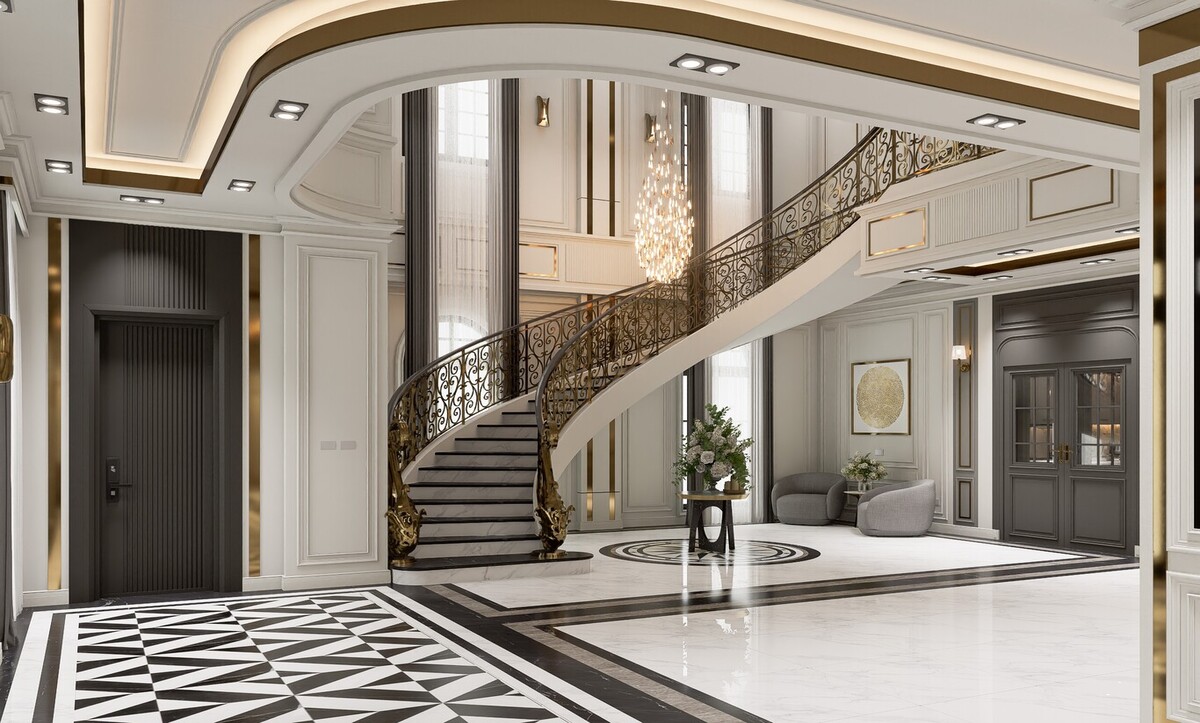
Privacy sets the grammar of a Saudi villa interior. The house is read from the front door inward, and a guest should travel through the reception rooms without once glimpsing the family's life. A considered entrance places the formal majlis and guest washrooms near the door, then draws a clear line beyond which the family zone, the haram, begins. Views from the street and from the reception rooms toward the private quarters are closed by wall placement, by the turn of a stair, and by the quiet interruption of a screen.
Screening carries both function and beauty. Geometric mashrabiya, fretted timber, and etched glass soften the light and hold the eye at the surface while filtering what lies beyond. Windows that face a street or a neighbour receive the same attention, so daylight enters without the family feeling watched. Careful space planning sorts these relationships at the outset, tracing the separate paths of guest, family, and household staff so no route crosses another by accident.
The majlis, men's and women's
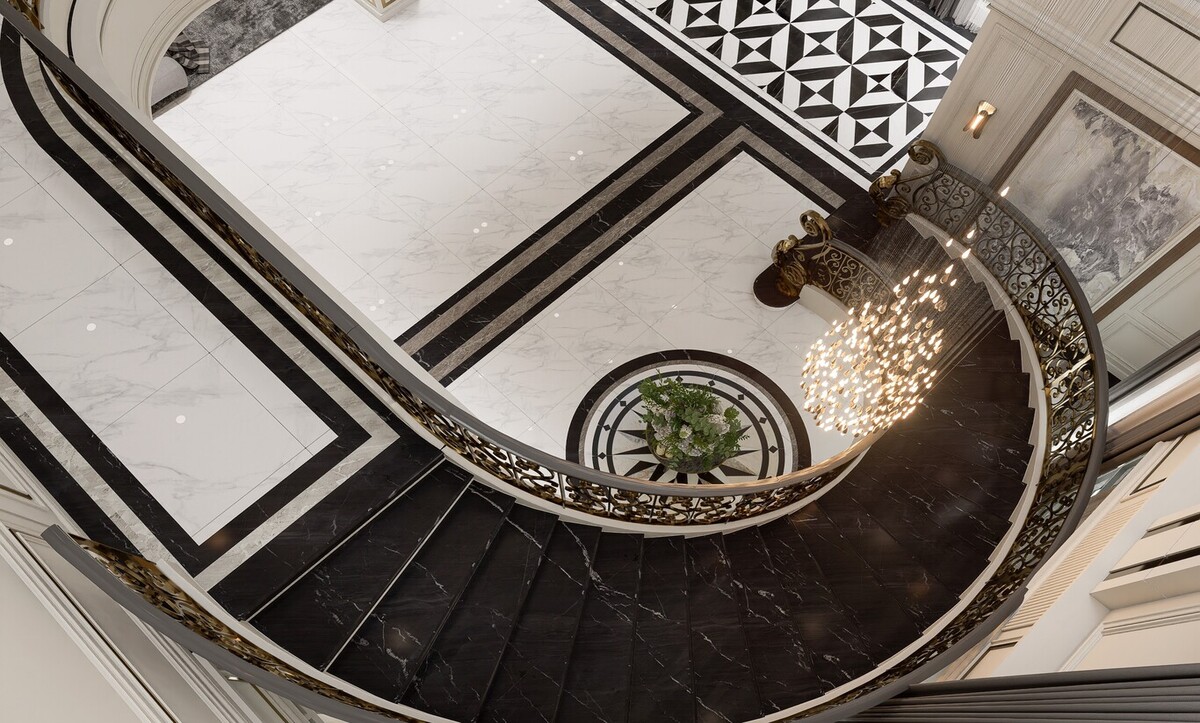
The majlis holds the centre of the brief. Saudi hospitality asks for men and women to receive separately, and each room deserves its own temperament, its own door, and its own route to the kitchen. The men's majlis is usually the more formal of the pair, set close to the entrance so guests are welcomed without stepping into family space. Deep seating along the walls, a broad clear floor for large gatherings, a ceiling that announces itself, and a service point for cardamom coffee and dates give the room its character. Some families keep to floor seating on long cushions; others prefer sofas; many want a room that can host both.
The women's majlis reads lighter and more layered, placed deeper in the plan for seclusion, often with its own door to a garden or terrace shielded from view. Gentler colours, generous lighting, and seating built for long visits shape it. A coordinated approach to majlis interior design treats the two as a matched pair, equal in quality and material yet distinct in mood, with sound handled so a gathering in one room never reaches the other. For families who host across cultures, a third, easier sitting room can sit between the two.
Hospitality and the working kitchen
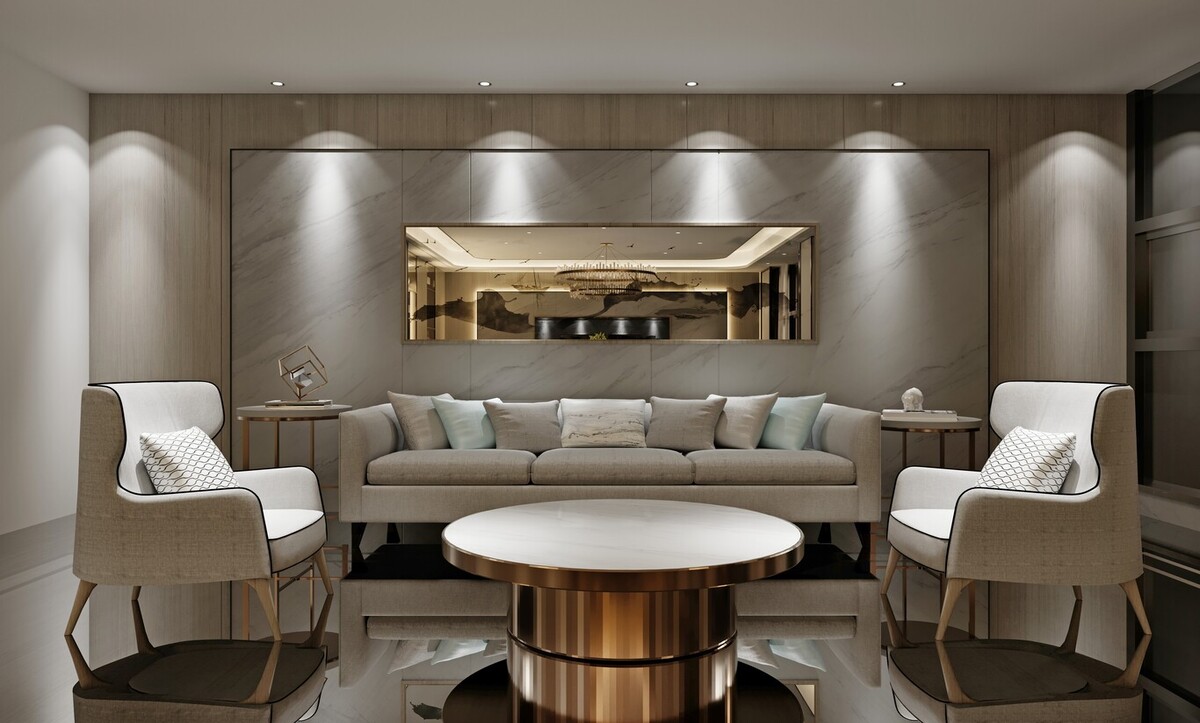
Kitchens in a Saudi villa carry more than a Turkish floor plan usually expects. Cooking at scale, above all through Ramadan and for family occasions, calls for two kitchens working together. A show kitchen stays composed for family use and light hosting, its surfaces clear, its finishes calm. A preparation kitchen behind it takes the heat, the aromas, and the volume of a feast, fitted with heavy extraction and its own service door. Staff move from the prep kitchen to the dining and majlis rooms along a path that never touches family space.
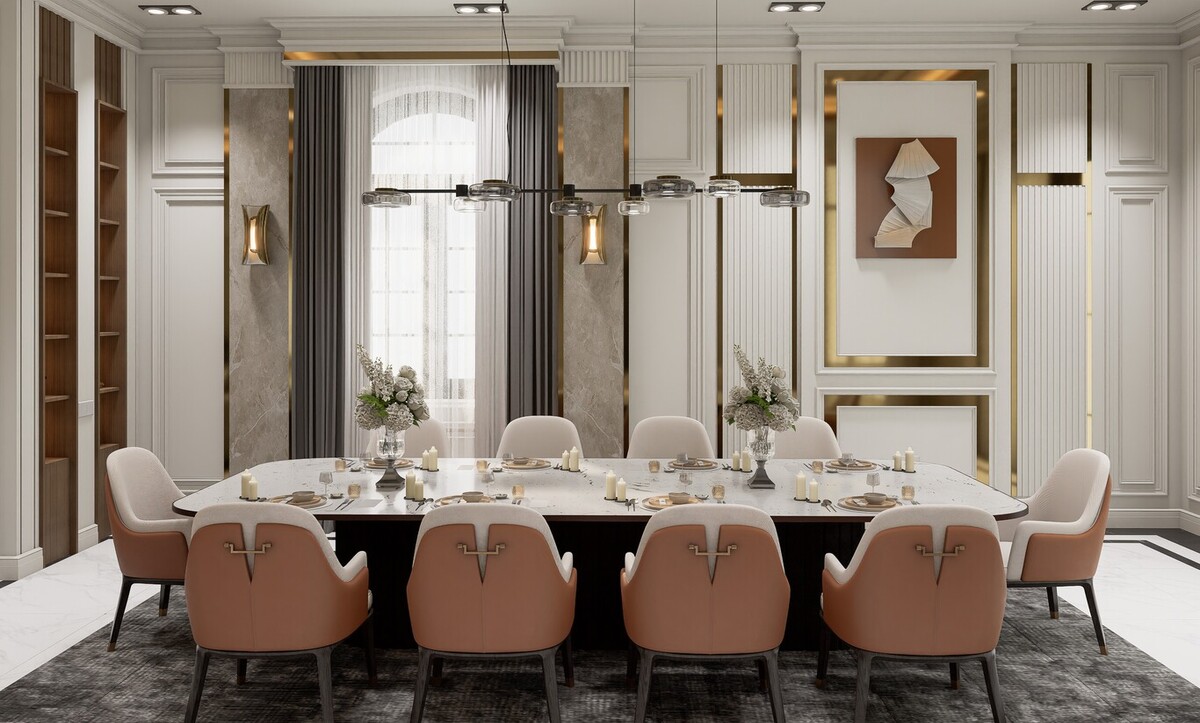
Formal dining grows to match. A table for twelve is a beginning; many families want the reach to seat far more through Eid and the visits that follow, along one long table or across the majlis floor. The room has to hold that number on a feast night and still feel right on a quiet Tuesday, which comes down to proportion, layered light, and furniture that adjusts. Settling the mood of these rooms early pays off, and a clear look at how design directions come together for a Turkish villa helps a family bring the reception rooms into line with the rest of the house before a single order is placed.
The design register: modern, Islamic, and Turkish
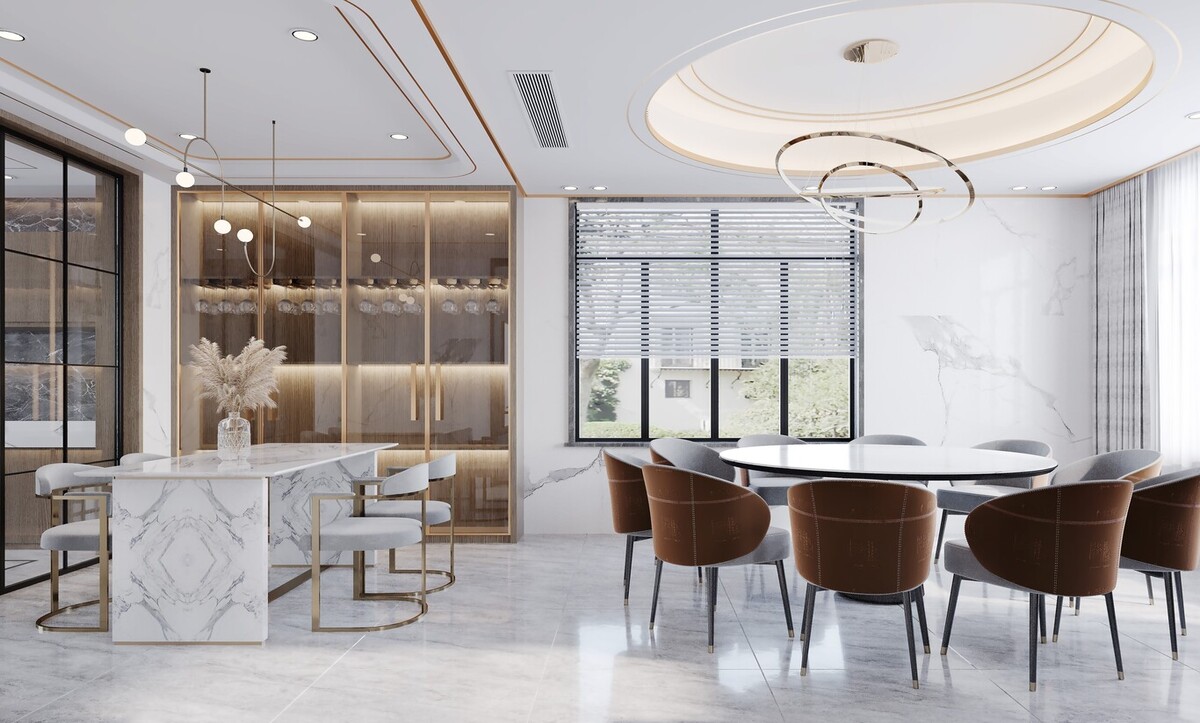
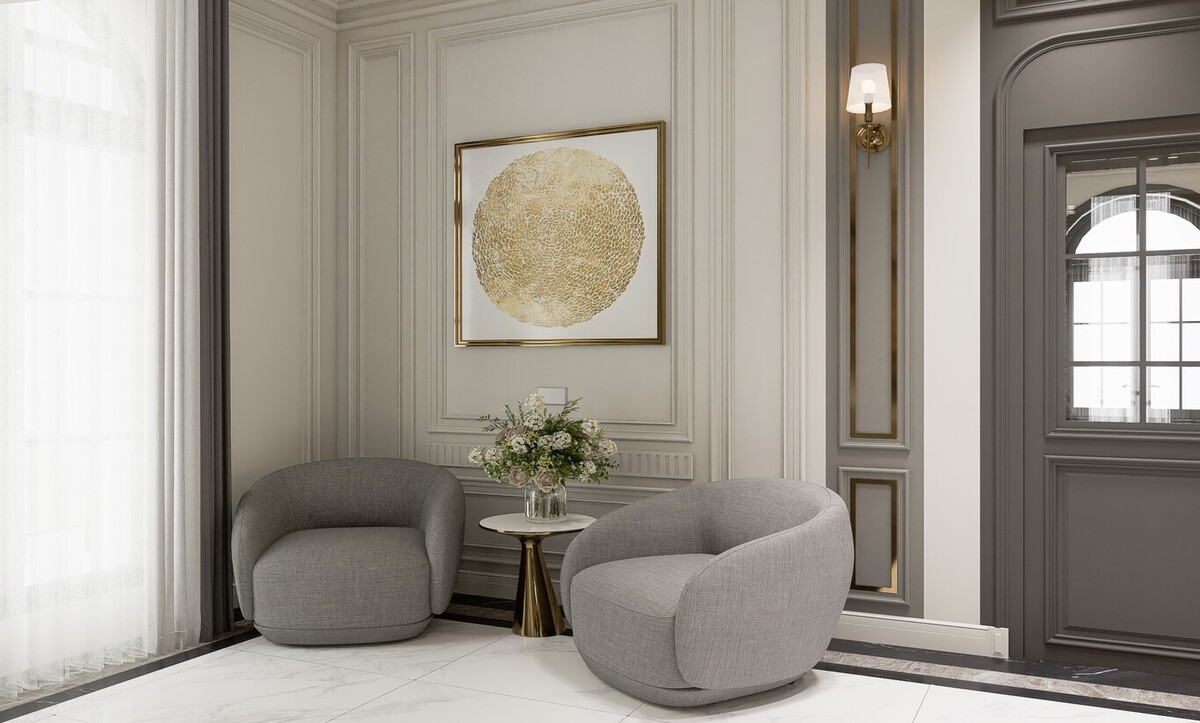
The visual language most Saudi clients favour settles between contemporary calm and Gulf tradition. Clean architectural lines and a quiet material palette carry the shell, while arches, geometry, plaster and gypsum ceilings, and calligraphic or arabesque detail bring the depth. Islamic interior design held with restraint reads as poised instead of heavy, leaning on symmetry, proportion, and a few well-placed motifs to name the heritage without crowding the walls.
Material anchors the whole. Marble does much of the speaking, and Turkey's own quarries put strong choices within reach of a Saudi client, from Afyon White to Marmara and Bilecik beige, laid across floors, feature walls, and the threshold of a majlis. Plaster cornices, a coffered soffit, and the occasional shallow dome supply the ceremony these houses expect, while brass, bronze, and warm oak soften the cool of the stone. The city feeds the result, and the current mood of its rooms runs through the interiors trending across Istanbul now, where Ottoman memory meets modern comfort in a way that suits a Gulf family well.
Private quarters and the family zone
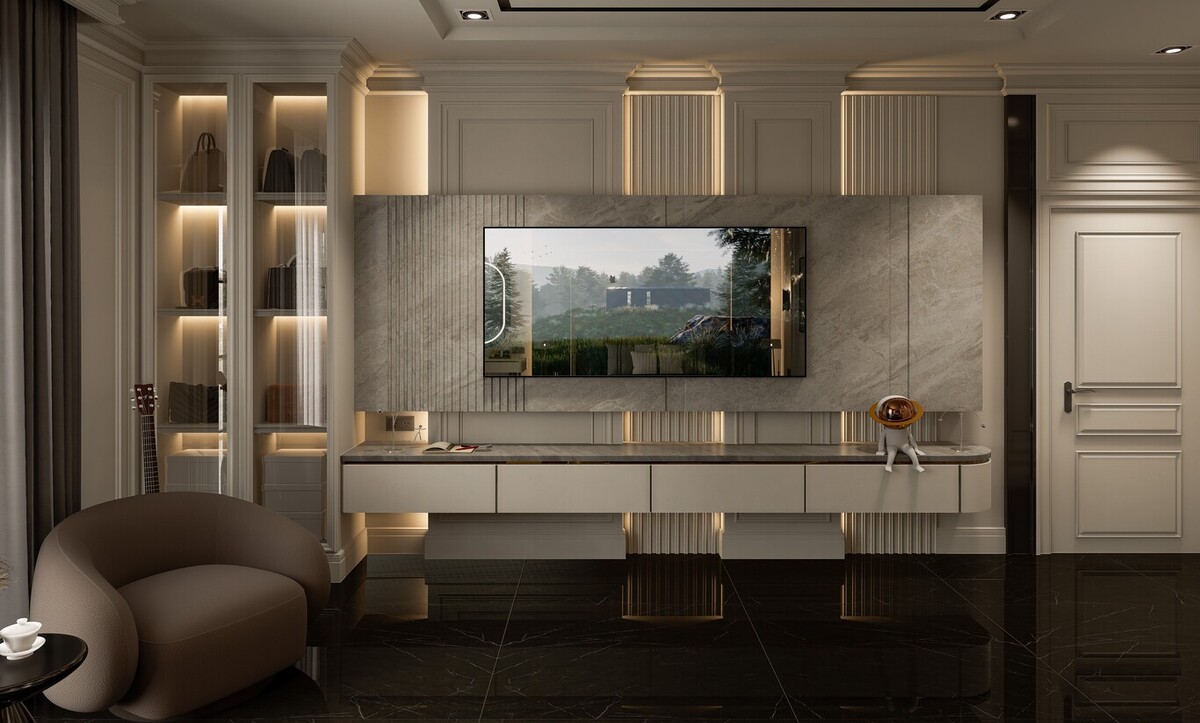
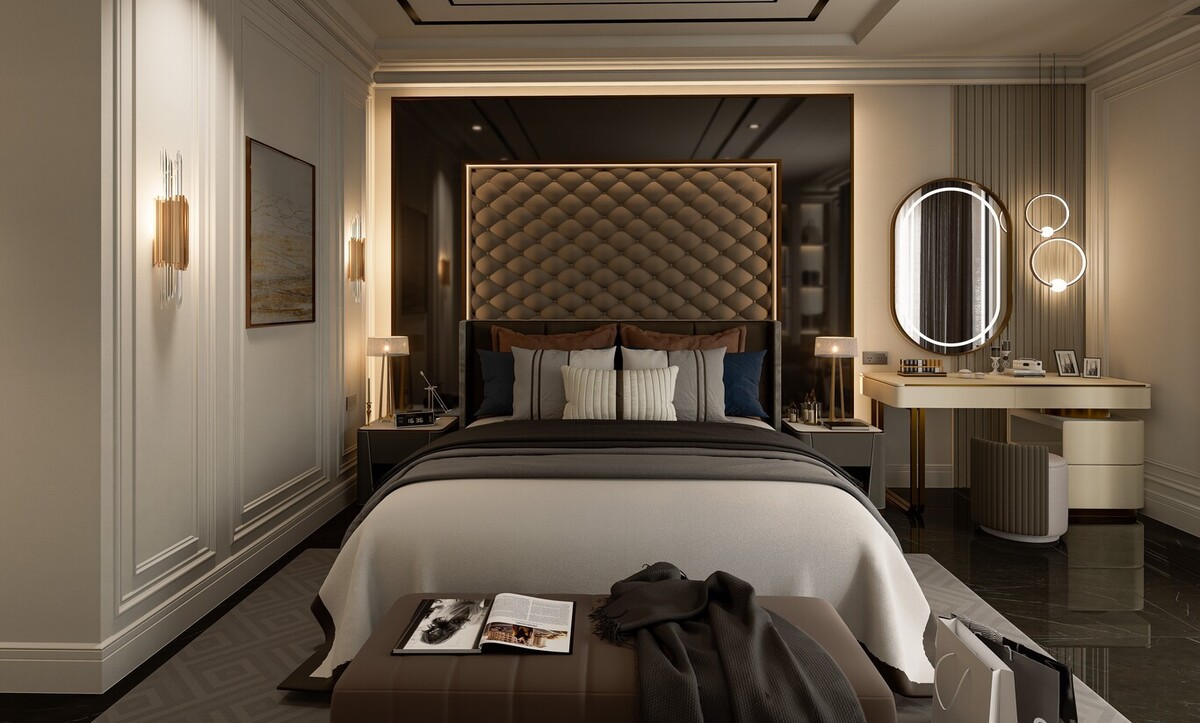
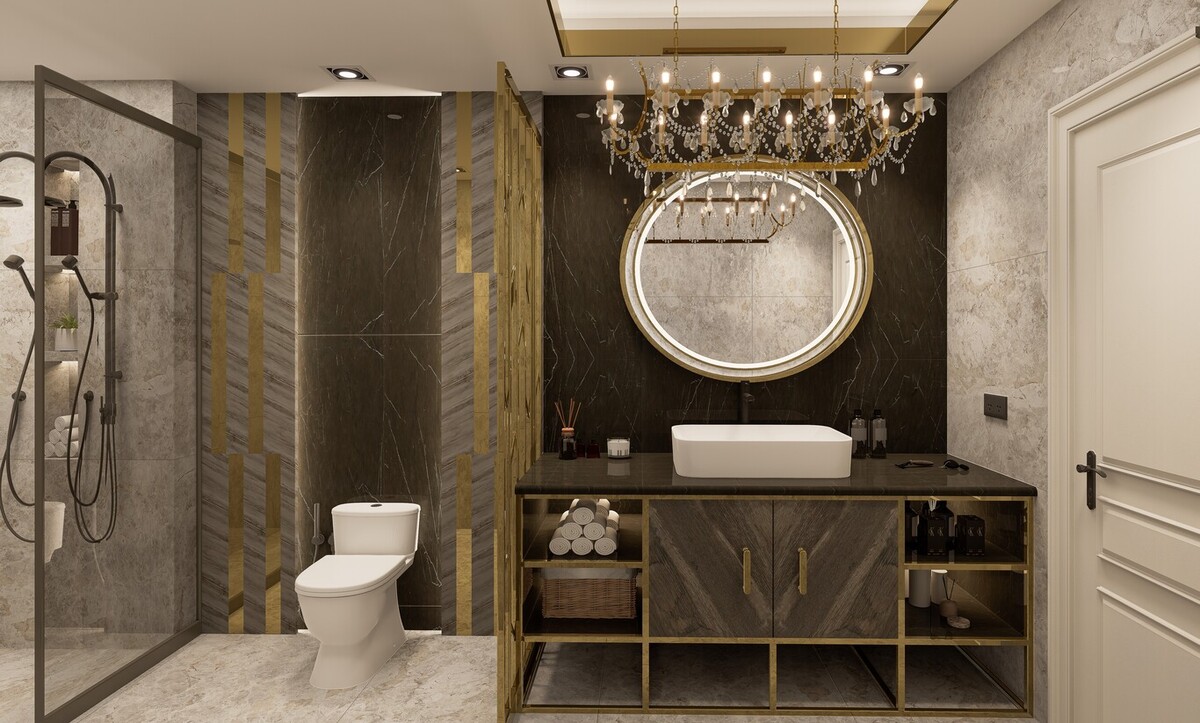
Past the reception rooms, the family zone is where the villa turns into a home. The master bedroom design usually anchors a private suite with a wide dressing room, a bathroom scaled for real comfort, and often a sitting corner of its own. Saudi clients frequently ask for a dressing room with the presence of a small boutique, its joinery built to measure, its mirrors full-length, its lighting soft and even, since wardrobes for a large household and formal dress ask for genuine space.
A prayer area belongs in almost every brief, turned correctly toward the qibla, quiet, and drawn slightly out of the household's traffic. Children's rooms, guest suites for visiting relatives, and a family sitting room that stays informal round out the private half of the plan. Warmth runs through all of it, delivered by underfloor heating, layered textiles, and materials that keep their comfort through the colder months the family will spend in the city.
Adapting to Istanbul's climate and craft
An interior drawn for a Saudi family has to honour where it stands. Istanbul's winters come cold and wet, so heating, insulation, and glazing are chosen for true comfort, and underfloor warmth runs beneath the main living and reception rooms as a matter of course. Larger windows gather the daylight a family used to Riyadh's brightness will look for in January, balanced by shading and heavy drapery that guard both warmth and privacy. Wet rooms, including any hammam a family requests, draw on Turkey's long bathhouse tradition and the marble and tile craft that came with it.
Turkish workmanship shapes the finish as much as the climate does. Local joinery workshops and stone suppliers put quality within a manageable budget, and the interior gains from materials cut and made close to the site. The house reads as a Gulf home in its welcome and its register, and as a Turkish one in its craft and its comfort.
Working with an Istanbul studio from Riyadh
Distance rarely gets in the way. A well-run project along the Riyadh–Istanbul line handles concept, layouts, and material choices at a remove, the client reviewing mood boards, renderings, and samples before travelling only for the site visits that matter. Many Saudi families already keep a foot in both places, which makes the rhythm feel natural. The pattern echoes what other Gulf clients know well, and the thinking behind a Gulf family's move into a Turkish home carries straight across from the Emirates to a Saudi buyer.
Timelines reward an early conversation. A full villa interior and fit-out, from first briefing to the last piece of furniture set in place, runs a realistic six to nine months, with furniture made to order in Turkish or European workshops sometimes stretching the calendar. Marble and joinery bought close to the project, checked at source, and installed by the same team that drew the rooms keep the whole thing of a piece. Clients commissioning interior design in Saudi Arabia alongside an Istanbul home often find that one studio holding both keeps the two houses matched in standard and in taste.
Bringing the brief together
The villa interiors that work for Saudi families in Istanbul share a clear order. Privacy is drawn from the front door inward, the majlis pair holds the ceremonial heart, the kitchen is built for real hospitality, and the design register carries Gulf tradition through a modern, Turkish-made shell. Warmth answers the city's weather, and the family zone stays screened from guest life at every turn. Each of those choices comes more easily when the whole house is composed as one idea, the reception rooms, private quarters, and service routes resolved together, room speaking to room.
Why work with Algedra
Delivering an interior on this brief is easier with a team that knows both the Gulf client and the Istanbul setting. Algedra designs villa interiors across Istanbul, Riyadh, Jeddah, and the wider GCC, taking on concept, technical drawings, 3D visualisation, material procurement, and on-site coordination under one roof. Every project holds the privacy, hospitality, and cultural register a Saudi family expects, and draws on Turkish craft and materials to deliver it. Decisions can be made along the Riyadh–Istanbul line without a client needing to stand on site at every stage.
Planning a villa in Istanbul? Talk to the Algedra team about your plot, your household, and how you host, and book a consultation to see how the majlis, family zone, and reception rooms would work in your home. Write to info@algedra.com.tr or call +90 533 701 89 71 to begin.
FAQ
How is villa interior design for Saudi clients in Istanbul different from a standard Turkish villa?
The plan puts privacy first, gives men and women their own majlis, splits the kitchen into show and preparation rooms for large-scale hosting, sets aside a prayer area, and works in an Islamic-influenced register. Standard Turkish layouts do not always allow for these, so the interior is drawn around them from the start.
Can a Saudi client run a full Istanbul villa project from Riyadh?
Yes. Concept, layouts, material choices, and 3D reviews are handled remotely, with travel to Istanbul for the key site milestones. One studio managing design through installation keeps the project whole across the distance.
How long does a villa interior design and fit-out take in Istanbul?
A realistic span is six to nine months from first briefing to furniture installation. Made-to-order furniture from Turkish or European workshops can lengthen it, and renovation timelines shift with the condition of the property.
Which materials suit luxury villa interiors in Istanbul?
Turkish marble such as Afyon White, Marmara, and Bilecik beige is widely used, with plaster and gypsum ceilings, timber joinery, brass and bronze detail, and mashrabiya screening. Buying close to the project keeps quality high and cost in hand.
Do the interiors give men and women separate spaces?
Yes. Most Saudi villa briefs set a formal men's majlis near the entrance and a quieter women's majlis deeper in the plan, each with its own door and service route, matched in quality and distinct in mood.