

Turkey's villa market rewards a confident facade. Along the Bosphorus, across the gated communities of Zekeriyaköy and Göktürk, and down the Aegean coast toward Bodrum and Çeşme, the exterior of a home carries more weight than almost any interior decision. It sets the value of the property, signals the taste of its owner, and has to survive a climate and a seismic reality that few other markets impose so directly. Buyers and homeowners tend to reach one question early: should the facade follow a modern design style of clean volumes and large glazing, or a classical one rooted in Ottoman and Mediterranean tradition? The right answer depends on where the villa sits, what it is built from, and who will eventually buy it.
What a facade has to do in Turkey
Before choosing a style, it helps to understand the conditions a Turkish facade answers to. Istanbul sits in a humid temperate band with cold, wet winters and hot summers, so a wall there has to manage rain, insulation, and solar gain across a wide annual swing. The Aegean and Mediterranean coasts trade that for long, dry, intense summers, where shading and thermal mass matter more than rain protection. Almost the entire country also lies within an active seismic zone, and the 2023 earthquakes in the south sharpened public attention on how facades are fixed to a structure. Heavy stone cladding that is poorly anchored becomes a hazard during ground movement, so current practice leans toward properly engineered fixing systems and, increasingly, ventilated facades that allow controlled movement. That structural coordination sits at the heart of sound villa architecture design, where the elevation and the frame behind it are resolved together.
Regulation shapes the outcome as much as taste. The national thermal insulation standard, TS 825, governs how much heat a wall may lose, and most new Turkish homes meet it through mantolama, the external insulation render system applied across millions of facades nationwide. A BEP-TR energy performance certificate is required when a property is sold or rented, which gives the facade a measurable role in a home's market paperwork. In protected areas, the conservation zones known as SİT alanları, including the historic Bosphorus shoreline where the old timber yalı mansions stand, alterations to a facade are tightly controlled, and a modern glass elevation may simply not be permitted.
The classical villa facade
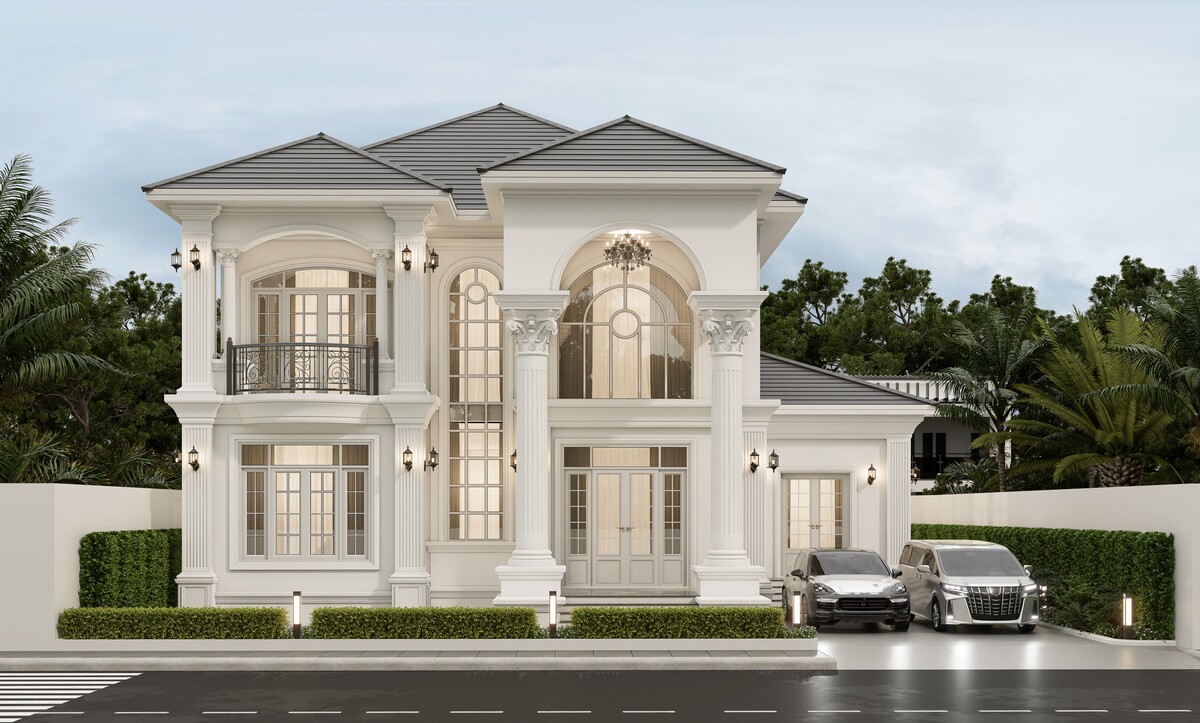
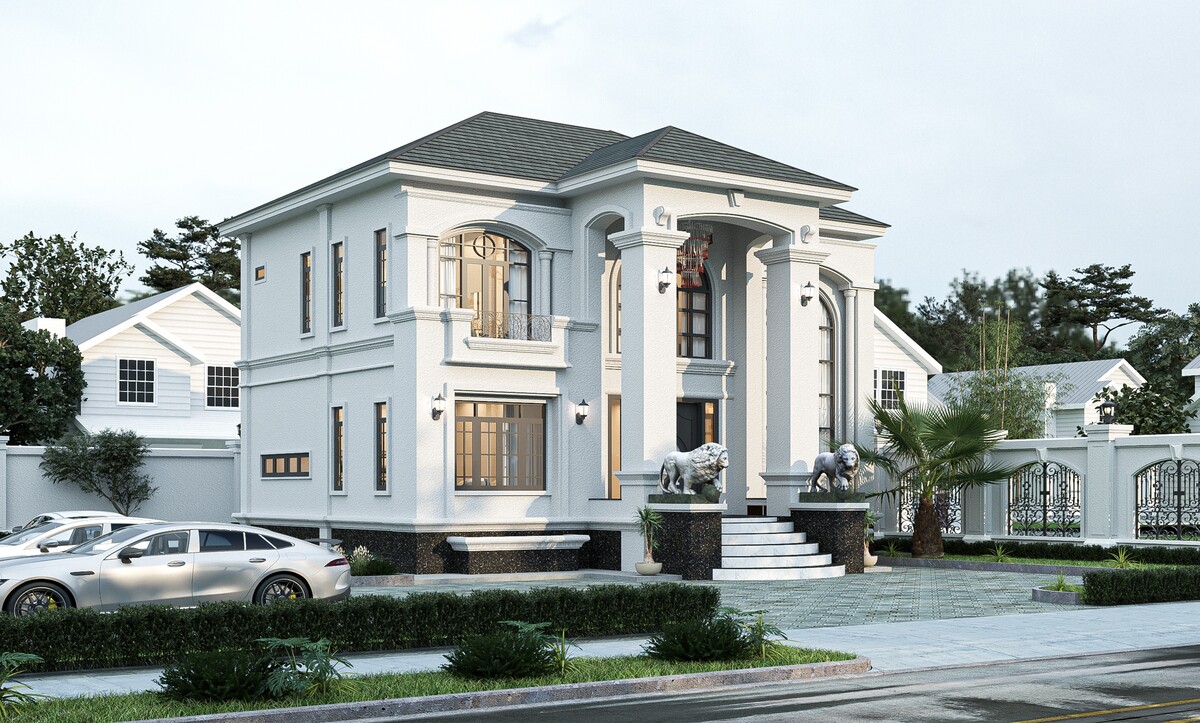
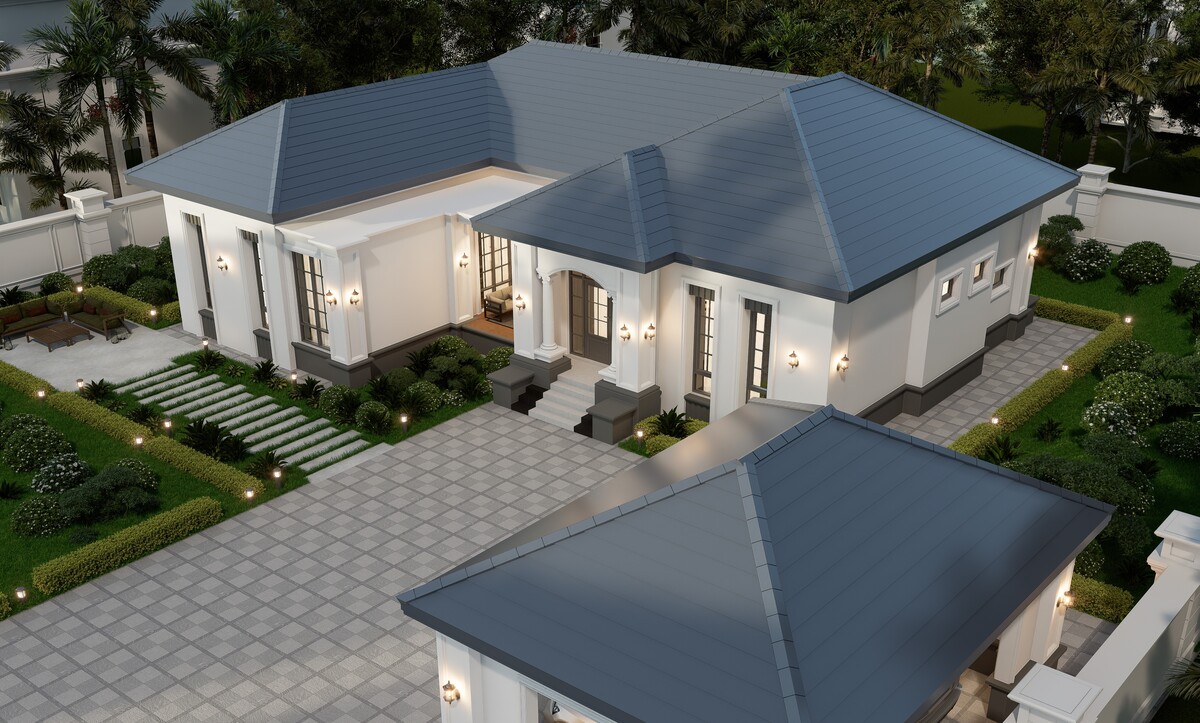
The classical villa facade in Turkey draws on two overlapping traditions. The first is Ottoman residential architecture, seen in the yalı and the köşk: timber or masonry homes with hipped roofs in terracotta tile, deep overhanging eaves, and the cumba, the projecting bay window that animates an upper floor. The second is the European neoclassical vocabulary that entered late-Ottoman and early-Republican building, with symmetrical compositions, rendered or stone walls, cornices, pilasters, and arched openings. Most classical villas today blend the two: a symmetrical front, natural stone or fine render, tall shuttered windows, wrought-iron balconies, and a pitched tiled roof.
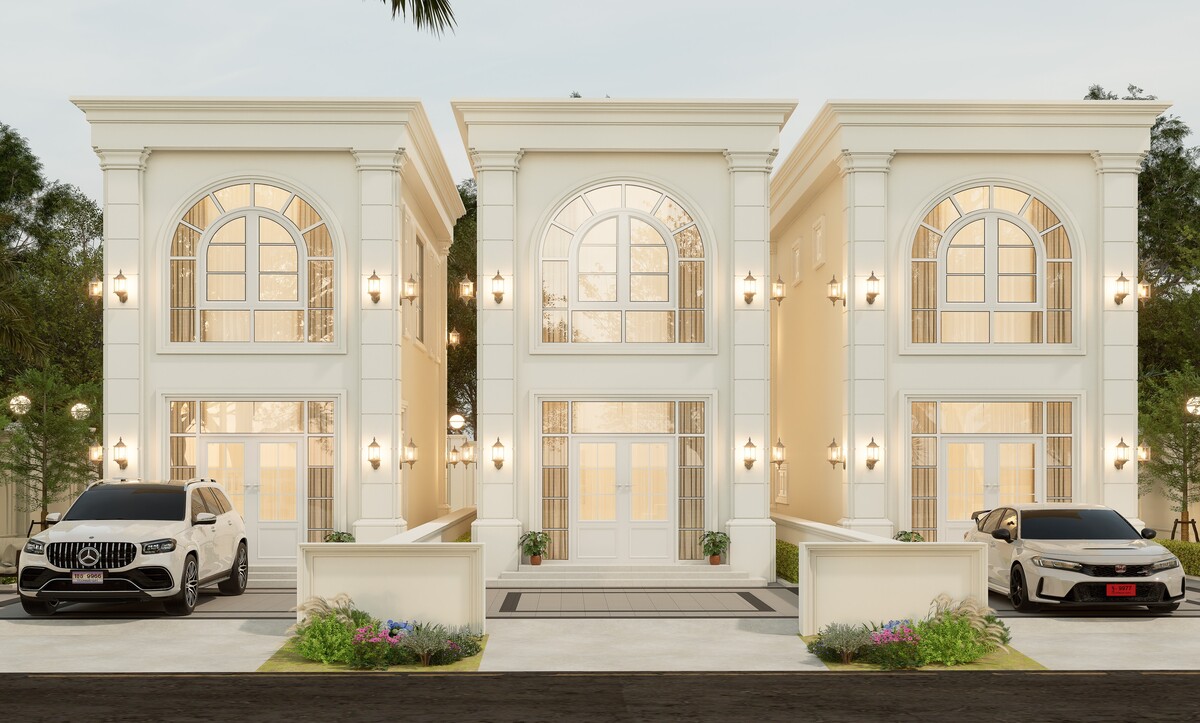
Materials carry the style. Turkey ranks among the world's major producers of natural stone, and a classical facade often reaches for Denizli travertine, Marmara marble, or regional limestone, finished with carved surrounds and a stone or rendered base. Roofs return to terracotta, and decorative tilework occasionally references the İznik and Kütahya ceramic traditions. A facade built this way ages slowly and reads as permanent, part of its appeal in established neighbourhoods such as the inland streets of Yeniköy or the older plots of Büyükçekmece. For the grandest of these homes, the discipline shades into palace exterior design, where proportion, symmetry, and ornament are handled at a ceremonial scale.
The classical approach asks for restraint to succeed. Overscaled columns, mismatched mouldings, and too many materials at once turn grandeur into pastiche quickly. The most convincing classical homes hold to a tight rule set: one dominant stone, a consistent window proportion, and a roofline that follows the symmetry of the plan. Homeowners weighing the look against a more contemporary one often find it useful to map the exterior against the interior they intend to live in, and a measured guide to balancing the styles across a Turkish villa is a sensible first reference before committing to either direction.
The modern villa facade
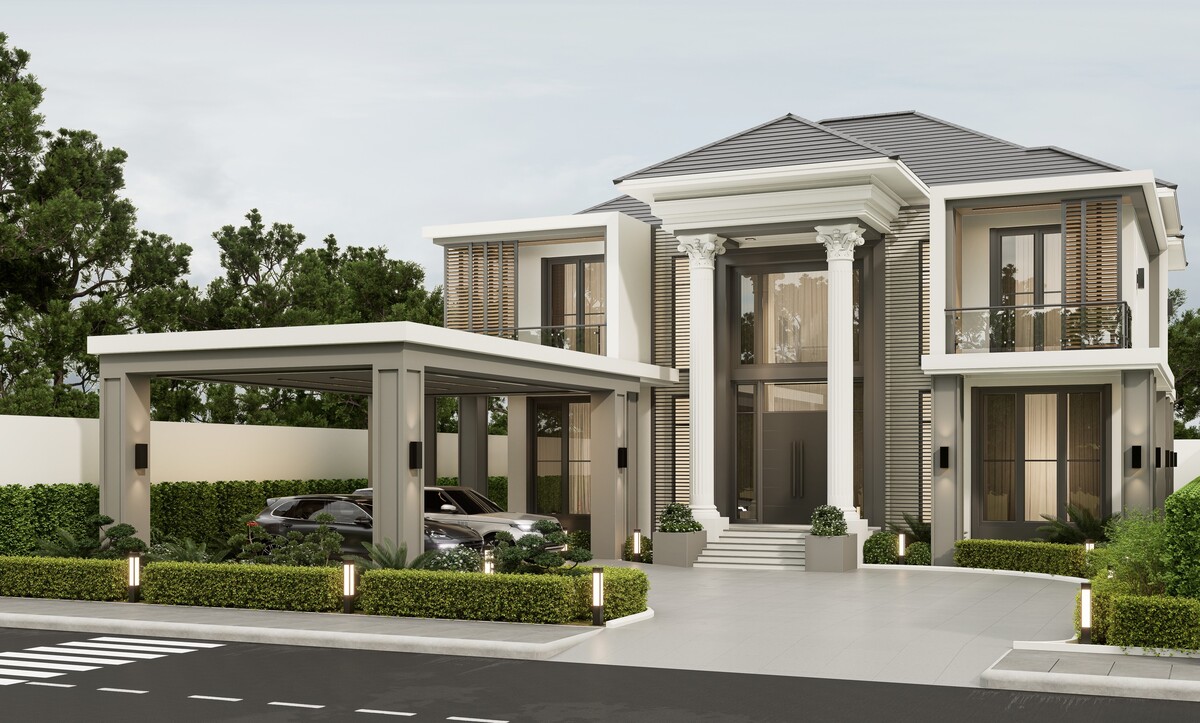
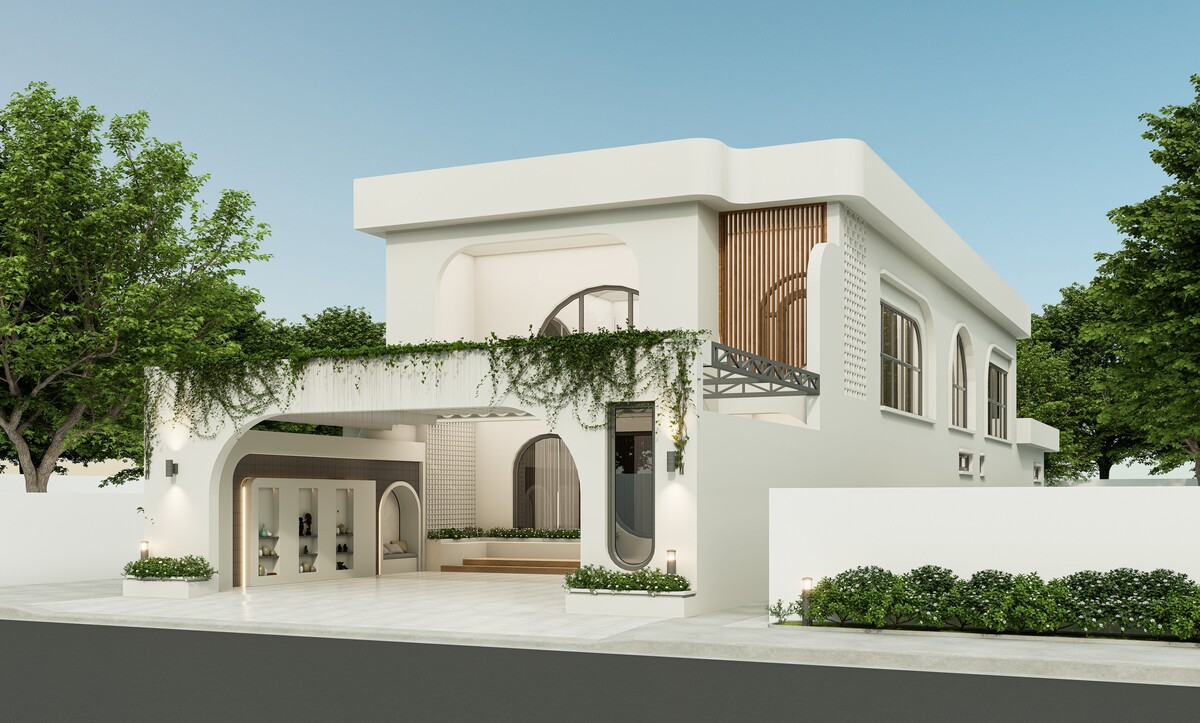
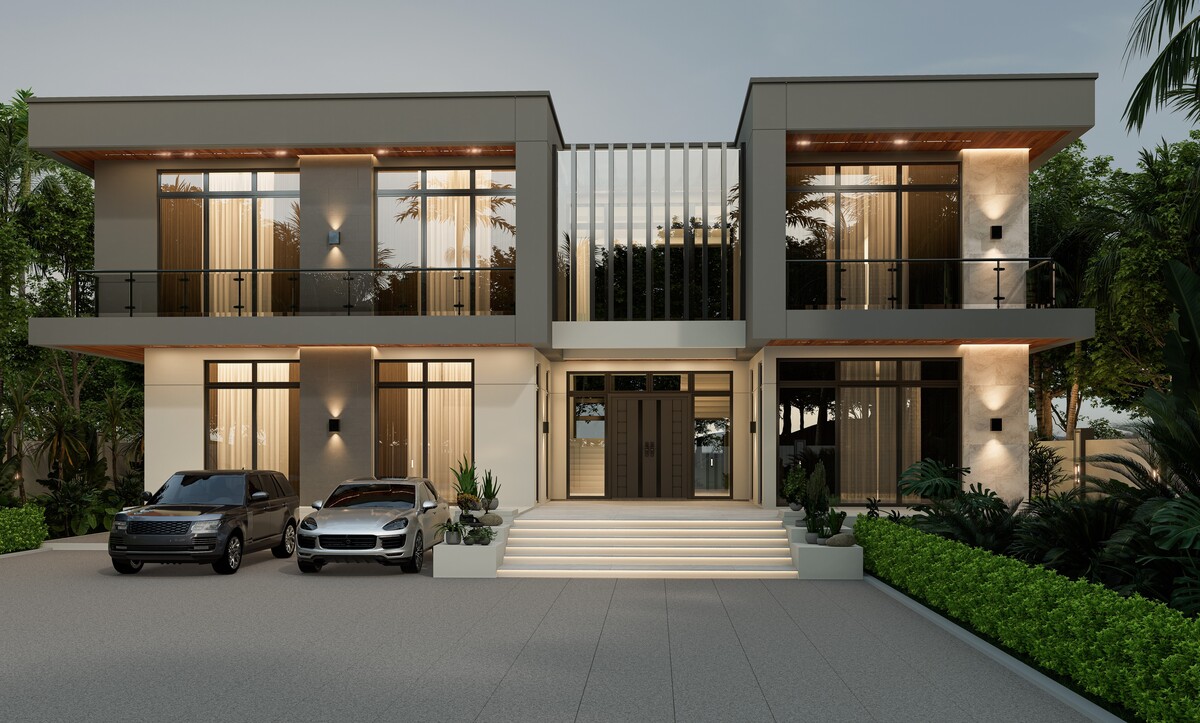
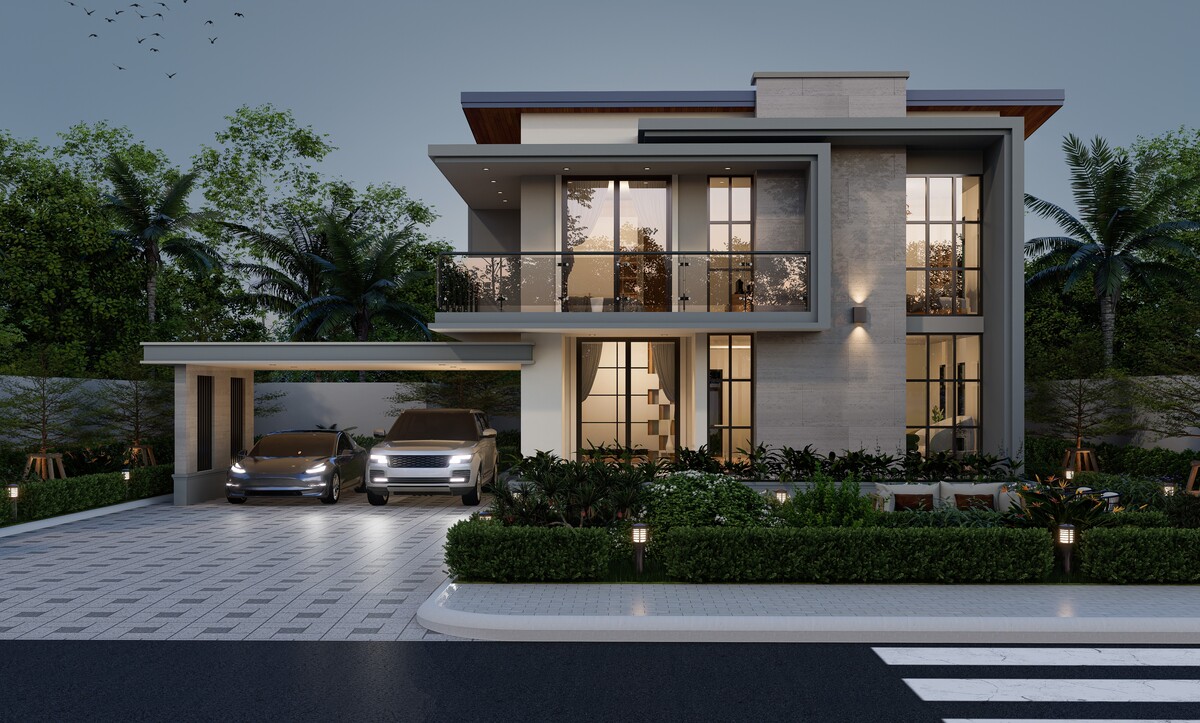
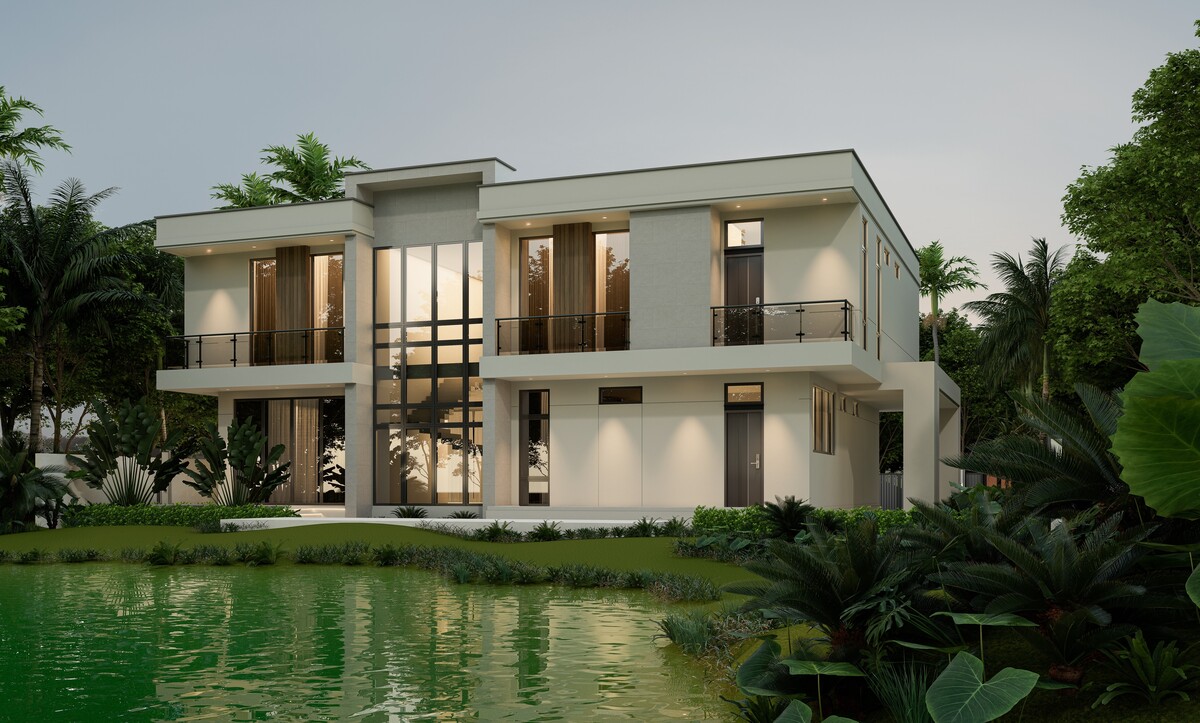
The modern villa facade speaks a different language: clean volumes, flat or low-pitched roofs, generous glazing, and a restrained palette of two or three materials. Across the newer gated communities around Istanbul, including Acarkent, Kemer Country, and parts of Bahçeşehir, and along the Bodrum peninsula in Yalıkavak and Türkbükü, the contemporary villa has become the default for buyers who want light, openness, and a connection to outdoor living. Floor-to-ceiling glass, cantilevered upper floors, and cladding that mixes natural stone with charcoal aluminium or warm timber define the current look.
The Aegean adds its own modern dialect. The Bodrum house, with its cubic white-stone forms, low silhouette, and blue accents, is a regional vernacular that already sits close to minimalism, which is why architects extend it so comfortably into contemporary work. A flat roof here doubles as a terrace, deep reveals shade the glass, and local stone grounds the white render so the home belongs to its hillside.
A recent project shows how the modern facade comes together. In a modern villa Algedra completed in Dubai, the exterior elevation was composed of matte stone, concrete, and timber zones aligned to the internal floor plan, with blue-tinted glass balustrades and charcoal frames carrying the same logic from the balconies to the edge of the building. Floor-to-ceiling folding glass doors dissolved the line between the living area and the terrace, and the materials were chosen for a hot, demanding climate. The same principles transfer directly to the Aegean and to summer-heavy plots in Antalya and Kalkan, where sun control and durable, low-maintenance surfaces matter most. For homeowners tracking where taste is heading, the looks currently shaping Istanbul homes show how the contemporary exterior and a pared-back interior increasingly arrive together.
Materials, and how they age
Material choice decides how either style holds up over a decade. Render-based facades finished with the mantolama system are the most common and the most affordable, and they suit both styles when detailed well, though they need repainting and show weathering on exposed coastal elevations. Natural stone, whether travertine, marble, basalt, or local limestone, carries a higher cost and more weight, performs strongly in the sun, and rewards a classical composition, while requiring careful sealing against staining. Aluminium composite and fibre-cement panels give the modern facade its crisp, flat planes and resist coastal salt well. Timber cladding warms a contemporary elevation and asks for maintenance in the Aegean sun. Glass delivers the openness buyers want, yet drives up cooling loads unless it is specified with solar-control coatings and proper shading. Considered villa exterior design in Turkey starts from these trade-offs, matching the material to the orientation, the climate band, and the budget before the aesthetic is finalised.
A point worth weighing is maintenance over time. A modern facade with quality panels and good detailing can run for years with little more than cleaning, while exposed render and timber both demand attention on a salt-laden coast. A classical stone facade is among the most durable surfaces a home can wear, though the carved detail and tiled roof raise the cost of any future repair. The cheapest facade to build is rarely the cheapest to own, and the calculation differs between a sheltered Istanbul plot and a windswept Bodrum hillside.
Regulation, setting, and resale
Location can settle the debate before personal taste enters. On the protected Bosphorus shoreline and in other conservation zones, a classical or heritage-respecting facade is often the only route to approval, and a glass-fronted box will not pass review. In a new-build community planned around contemporary homes, a heavily ornamented classical villa can read as out of place and may narrow the pool of future buyers. Resale rewards coherence with the neighbourhood: a modern facade lifts value in Yalıkavak or a new Istanbul compound, while a refined classical exterior holds its worth in established, leafy districts.
International buyers shape this too. Many arrivals from the Gulf bring a preference for grandeur and stone, and the practical considerations behind a move from the UAE to a Turkish home frequently steer the facade decision toward a classical or hybrid expression that feels familiar. Local buyers, by contrast, increasingly favour the clean contemporary look on new plots, which is why the two styles tend to cluster in different parts of the market.
The setting around the facade
A facade never stands alone. The approach, the boundary treatment, and the planting frame how the elevation is read from the street and from within. A classical villa gains from formal symmetry in its garden, with clipped hedging, a central path, and stone planters, while a modern home reads best against architectural planting, gravel beds, and clean retaining walls that echo its geometry. Considered landscape design ties the two together, so the facade and its setting carry the same idea and the boundary wall, gate, and driveway extend the architecture instead of interrupting it.
So which style works best?
Neither wins outright, because the right answer is set by the plot, the climate, the rules, and the buyer. A modern facade is the stronger choice for coastal and Aegean homes, for new gated communities, and for owners who prioritise light, indoor-outdoor living, and lower maintenance in glass and panel systems. A classical facade is the stronger choice in conservation areas, in established inland neighbourhoods, for very large or ceremonial homes, and for owners who value permanence, stone, and a sense of heritage.
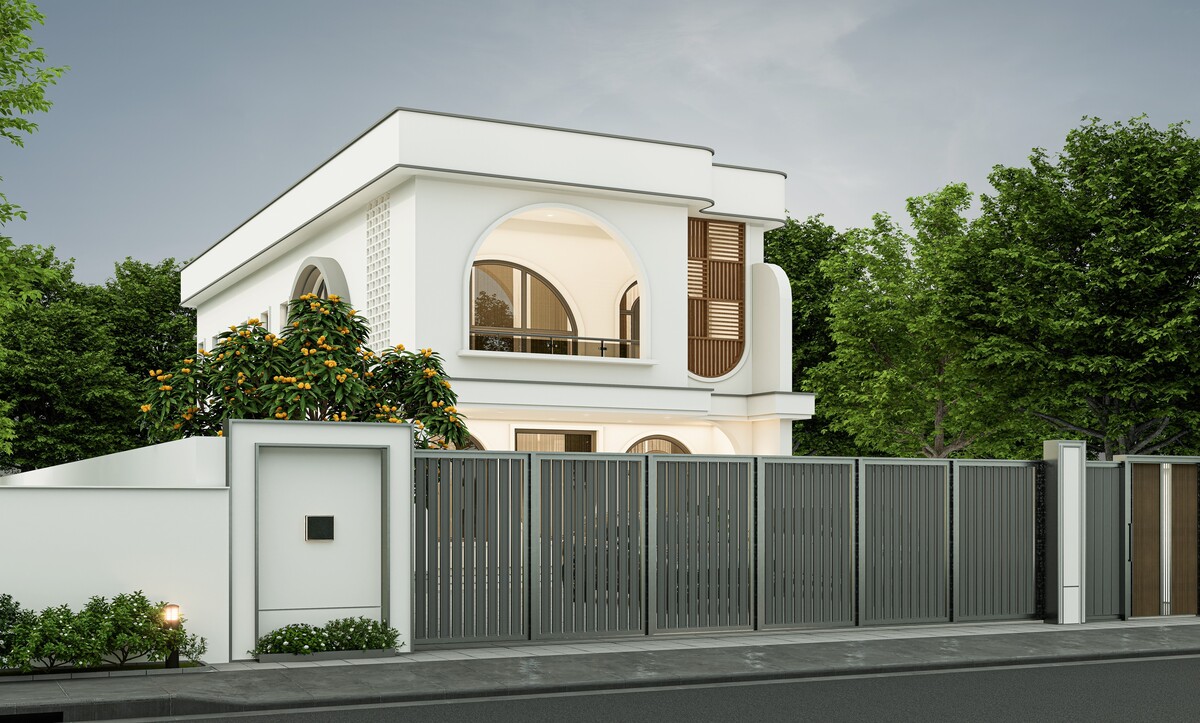
A growing middle path satisfies many homeowners: a hybrid that keeps a symmetrical, stone-grounded composition while opening the rear elevation to glass and the garden, marrying the dignity of a classical front with the comfort of modern living behind it. The villas that succeed in either direction share one trait, which is discipline. A clear material palette, correct proportion, and detailing tuned to Turkey's climate and seismic demands will carry a home further than any single stylistic choice.
Why work with Algedra
Choosing between a modern and a classical facade is easier with a team that designs the exterior, the architecture, and the landscape under one roof. Algedra works across Istanbul, the Aegean coast, and the wider region, handling concept, technical drawings, 3D visualisation, and on-site coordination so the facade that is drawn is the facade that gets built. Every design accounts for the local climate band, the thermal and seismic codes, and the character of the neighbourhood, which keeps the finished home both beautiful and approvable.
Planning a villa facade in Turkey? Talk to the Algedra team about your plot, your preferred style, and your budget, and book a consultation to see how a modern, classical, or hybrid exterior would work on your site. Visit our contact page or write to info@algedra.com.tr to begin.
FAQ
Is a modern or a classical villa facade cheaper to build in Turkey?
A render-based modern facade using the mantolama insulation system is usually the most affordable to build. A classical stone facade with carved detail and a tiled roof costs more upfront, though it tends to be highly durable. The cheapest facade to construct is not always the cheapest to maintain, so the full lifetime cost is the figure worth comparing.
Are modern glass facades allowed everywhere in Turkey?
No. In conservation zones (SİT alanları), including stretches of the Bosphorus shoreline, facade changes are tightly controlled and a contemporary glass elevation may be refused. New-build plots and most gated communities allow modern facades freely. Always confirm the zoning and any conservation status before committing to a design.
Which materials last best on a Turkish villa facade?
Natural stone such as travertine, marble, and local limestone is among the most durable, especially in sun. Aluminium composite and fibre-cement panels resist coastal salt well. Render and timber both perform if maintained, but they weather faster on exposed Aegean and Mediterranean elevations.
Do villa facades have to meet earthquake rules in Turkey?
Yes. Turkey lies in an active seismic zone, and cladding has to be anchored to handle ground movement under the national seismic code. Heavy stone facades need engineered fixings, and ventilated facade systems are increasingly used because they allow controlled movement.
Can I combine modern and classical elements on one villa?
Yes, and a hybrid is a popular outcome. A common approach keeps a symmetrical, stone-grounded street facade while opening the rear elevation to glass and the garden, which gives a classical presence at the entrance and modern living behind it.