

Istanbul is one of the few cities in the world where a designer can source hand-cut marble from a quarry two hours away, commission bespoke upholstered furniture from an atelier in the same district, and have an Ottoman-era apartment with 3.8-metre ceilings as the canvas for all of it. For someone arriving from Dubai or Abu Dhabi with a clear sense of what they want from a home, the Turkish interior design market is full of real advantages — and a handful of genuine surprises that are worth understanding before the project begins.
The interior design experience in Turkey differs from the UAE in its market structure, its production rhythms, its material ecosystem, and the architectural character of the properties themselves. None of these differences are obstacles. Most of them are advantages. But navigating them well requires adjusting expectations formed in a market that runs on fast imports and contractor-heavy delivery to one that runs on local craft, longer lead times, and a design process that rewards early clarity over late-stage changes.
This article covers what UAE clients typically encounter when they bring an interior design project to Istanbul: how the market is structured, what Istanbul's architecture asks of the design, where Turkish production genuinely excels, how costs compare, and how to manage the project practically when you are based in the UAE.
1. How Istanbul's Interior Design Market Is Structured
Dubai's interior design market runs on imports. The city's entire residential supply chain — furniture, stone, lighting, textiles, joinery hardware — is built around moving goods in efficiently from Europe, China, and India and delivering them quickly. Contractors are set up to work from detailed drawings, procurement is centralised, and the expectation from concept to handover is speed. This is a well-engineered system for a city that has built tens of thousands of luxury apartments and villas in a short period of time.
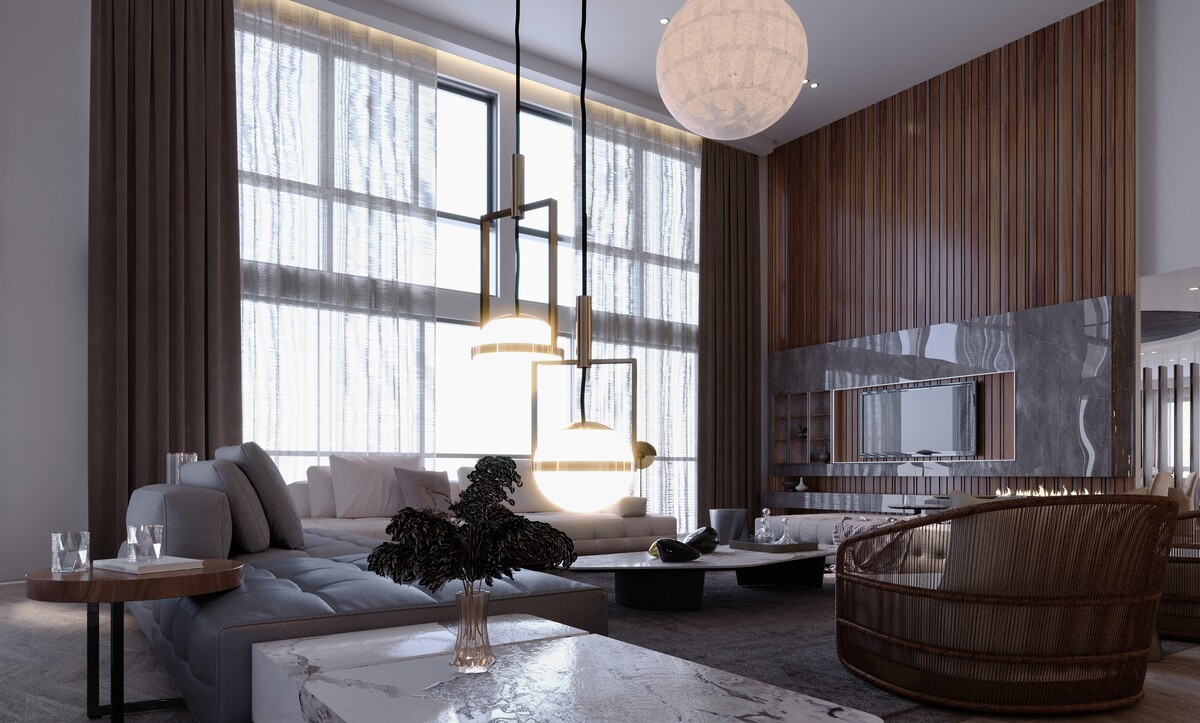
Istanbul's market is built differently. The city is a production centre, not a distribution hub. Custom joinery is made locally, often in workshops that have been running for two or three generations. Stone is quarried domestically. Upholstery fabrics are woven in Turkey and exported to European luxury brands — the same workshops sell directly to Istanbul designers at origin pricing. The consequence of this production depth is that bespoke quality is accessible at cost points that would require significant European import budgets in the UAE. The trade-off is time: custom joinery in Istanbul runs four to eight weeks, compared to two to three in Dubai.
The fee structures in Istanbul also differ. Studios here are more likely to operate on a percentage of the total project value or a per-square-metre design fee than on the fixed-scope contracts common in the UAE. Understanding exactly what is included — and what sits outside the design fee in the contractor relationship — is worth establishing clearly at the briefing stage. A detailed breakdown of how Istanbul's interior design costs are structured by project type, studio tier, and neighbourhood gives a useful orientation before the first studio conversation.
A practical note on contractor relationships: in the UAE, a client typically engages a design studio and a fit-out contractor as separate parties, with coordination between them managed either by the studio or by the client. Istanbul has fit-out contractors of equivalent capability, but the coordination model tends to be less formalised. Studios that handle both design and execution under one contract generally produce better results here than those that hand off to a contractor after design development. The oversight gap between designer and contractor — which is narrow in the UAE's more contractually structured market — is wider in Istanbul when the two are separated.
2. What Istanbul's Architecture Asks of Interior Design
Istanbul's residential property market presents architectural variety that is largely absent from the UAE. New-build towers in Sarıyer, Maslak, and the Asian side development corridors look familiar to anyone from Dubai — high floor plates, open-plan layouts, large glazed facades. These properties give the designer a clean canvas and the design process runs at a recognisable pace.
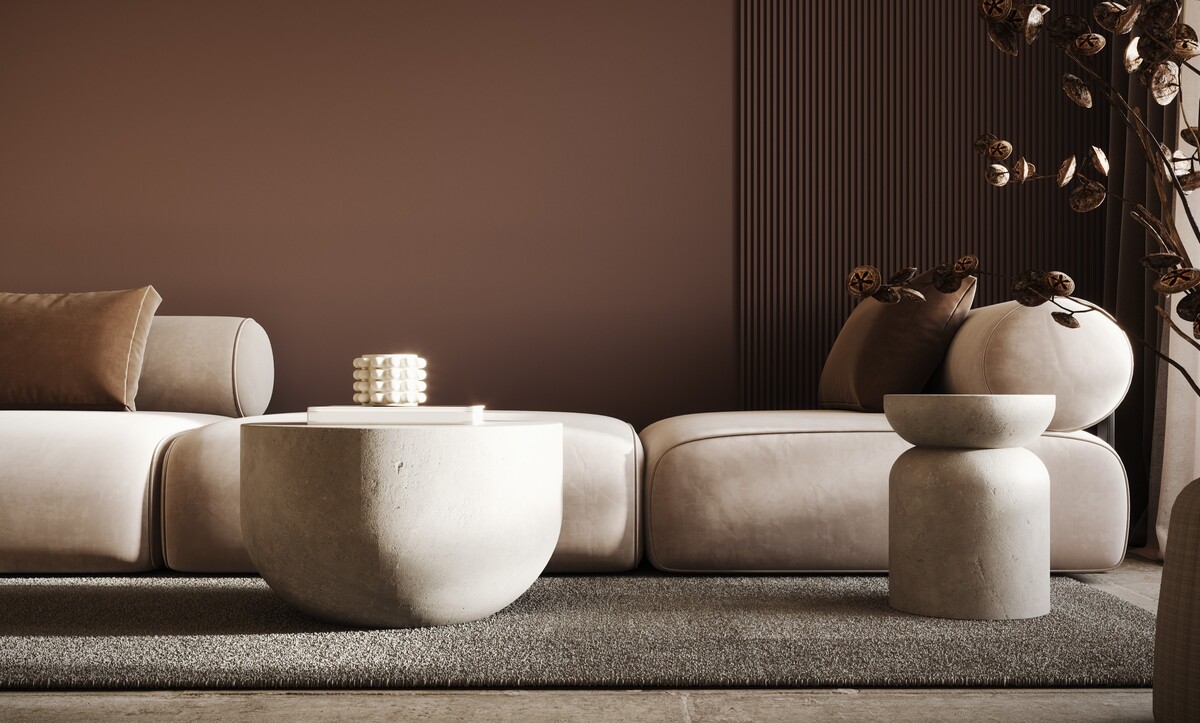
The older stock is a different proposition. Premium apartments in Beşiktaş, Nişantaşı, Cihangir, and the Bosphorus-facing districts often sit in buildings from the 1920s through to the 1960s, with original plaster cornices, parquet floors, ceiling heights above 3.5 metres, and load-bearing wall configurations that shape what can and cannot be changed. Working within these constraints is one of the pleasures of Istanbul interior design for a designer who knows the city. Restoring period details while introducing contemporary elements — or clearing everything and working against the raw architectural volume — both require a design intelligence that goes beyond surface selection.
Bosphorus-facing villas are in a category of their own. The strait is 31 kilometres long and the residential properties along its banks — from Rumelihisarı on the European shore to Kuzguncuk on the Asian — vary enormously in architectural age, orientation, plot depth, and what the view actually means in spatial terms. A ground-floor yalı apartment looking across a coastal road to the water is a fundamentally different design problem from a top-floor residence where the glazing begins at floor level and the Bosphorus fills three walls. The light, the glare, the seasonal variation, and the sight-line management all require specific solutions that take experience in these properties to get right. A thorough guide to the constraints and opportunities of Bosphorus-view interiors covers the glazing decisions, regulatory considerations, and spatial approaches that determine how well these specific properties are designed.
One consistent observation from UAE clients arriving into Istanbul properties: the rooms are larger than they expected, and the ceiling heights change the proportions of everything. Furniture scaled for a Dubai apartment tends to sit low and sparse in an Istanbul interior with 3.5-metre ceilings. Scale recalibration — larger artwork, taller joinery, furniture with more presence — is one of the earliest adjustments a designer makes when briefing an Istanbul project for a client whose reference point is UAE residential interiors.
3. Materials: What Turkey Produces and Why It Matters
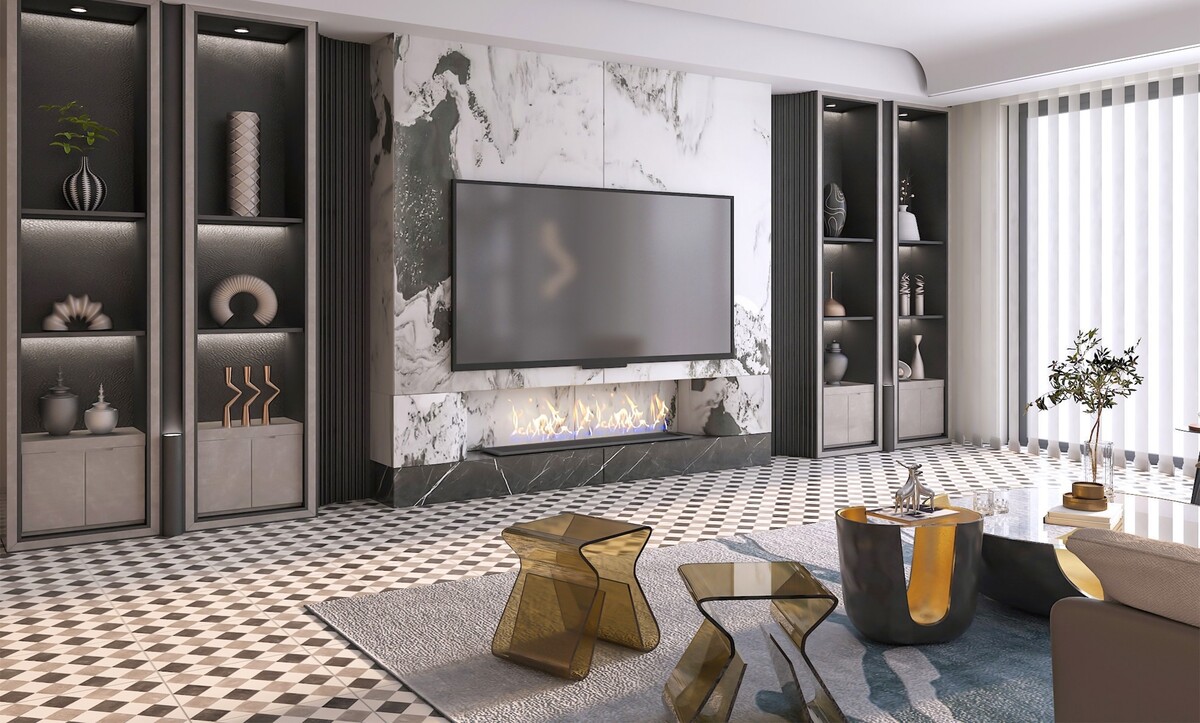
Turkey is one of the world's significant stone-producing countries, and this single fact changes the economics and logistics of a residential project in ways UAE clients often do not anticipate until they are in the middle of one. Marble, travertine, limestone, and basalt come from domestic quarries in Afyon, Bilecik, Thrace, and the Marmara region. Varieties that carry substantial import premiums in Dubai — Afyon White, Bilecik Beige, Marmara Island marble — are available at production cost in Istanbul, with the ability to visit the quarry, review the slab before it is cut, and specify exactly what goes into each room. This is a level of stone procurement that requires either significant budget or specialist sourcing arrangements in the UAE.
Timber and custom furniture production follow the same pattern. Istanbul has a furniture-making tradition that ranges from industrial-scale manufacturers to small ateliers capable of producing bespoke joinery to detailed architectural drawings. The ateliers in particular produce at a quality that in the UAE would be sourced from Italian imports. The cost is materially lower and the communication loop is short — changes to a cabinet specification can be made during production rather than after a container has been shipped. For interiors with significant bespoke joinery — libraries, kitchen cabinetry, wardrobe systems, majlis seating — this is a genuine structural advantage.
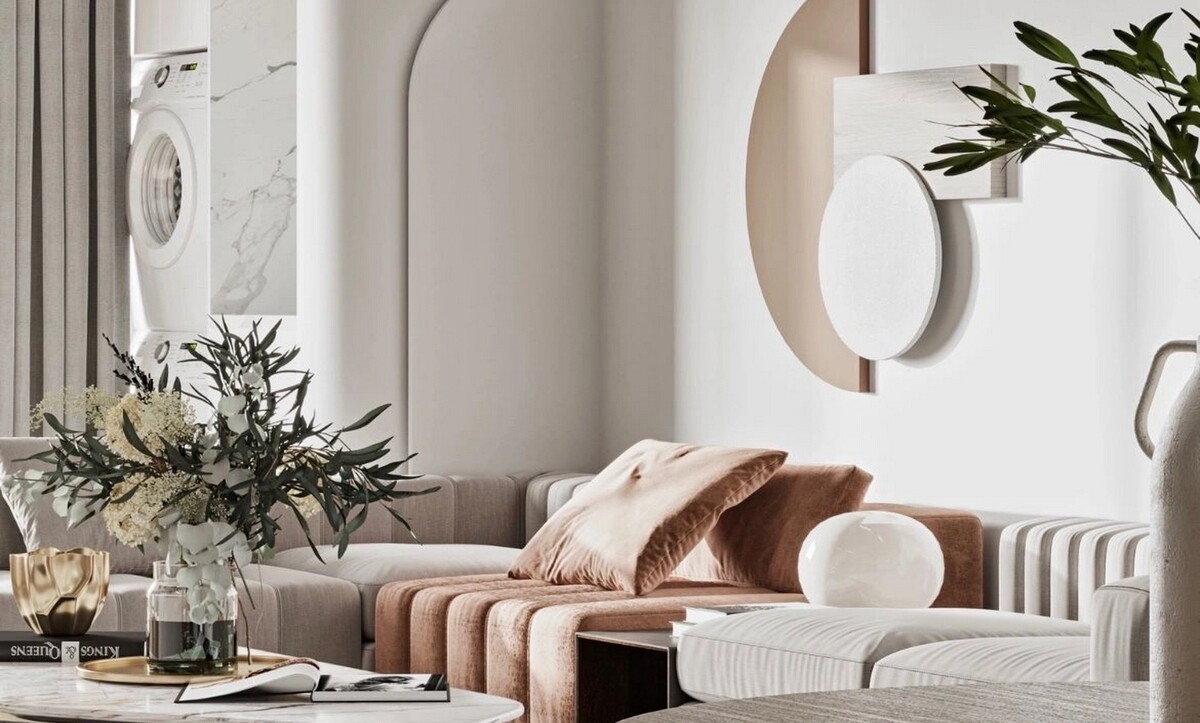
Textiles are a third category where Turkish production depth directly benefits a residential project. Hand-knotted carpets, kilims, and upholstery fabrics in wool, linen, and cotton are available at origin pricing from the same workshops that supply European luxury brands. For a UAE client furnishing a villa in Istanbul, using Turkish textile suppliers domestically rather than importing European-brand equivalents cuts both cost and lead time. How these material advantages shape the design decisions in a Turkish villa project — room by room, finish by finish — is covered in Algedra's guide to villa interior design trends in Turkey.
One material category where Turkey does not have a structural advantage over the UAE is imported European furniture. Major Italian and Scandinavian brands are available in Istanbul — there are showrooms in Nişantaşı and the design districts — but pricing is broadly comparable to Dubai. The advantage of Istanbul is in what is produced locally, not in what is imported.
4. Design Styles: What Translates Directly, What Needs Adjustment
The three style directions that dominate Gulf luxury residential design — contemporary with warm material palettes, neoclassical with high proportions, and Arabic-register interiors with a formal majlis — all work well in Istanbul's residential context. The spatial typologies exist, the production capacity exists, and Istanbul has its own long tradition of formal reception rooms that gives the majlis a natural place in Turkish villa layouts.
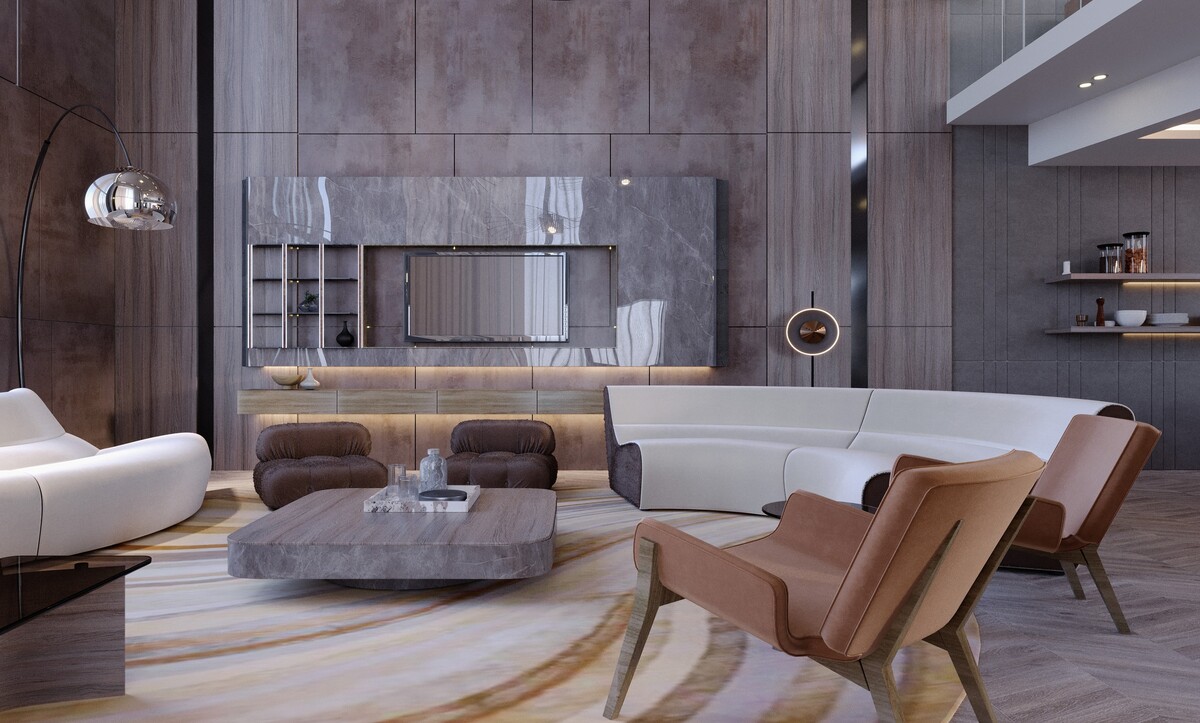
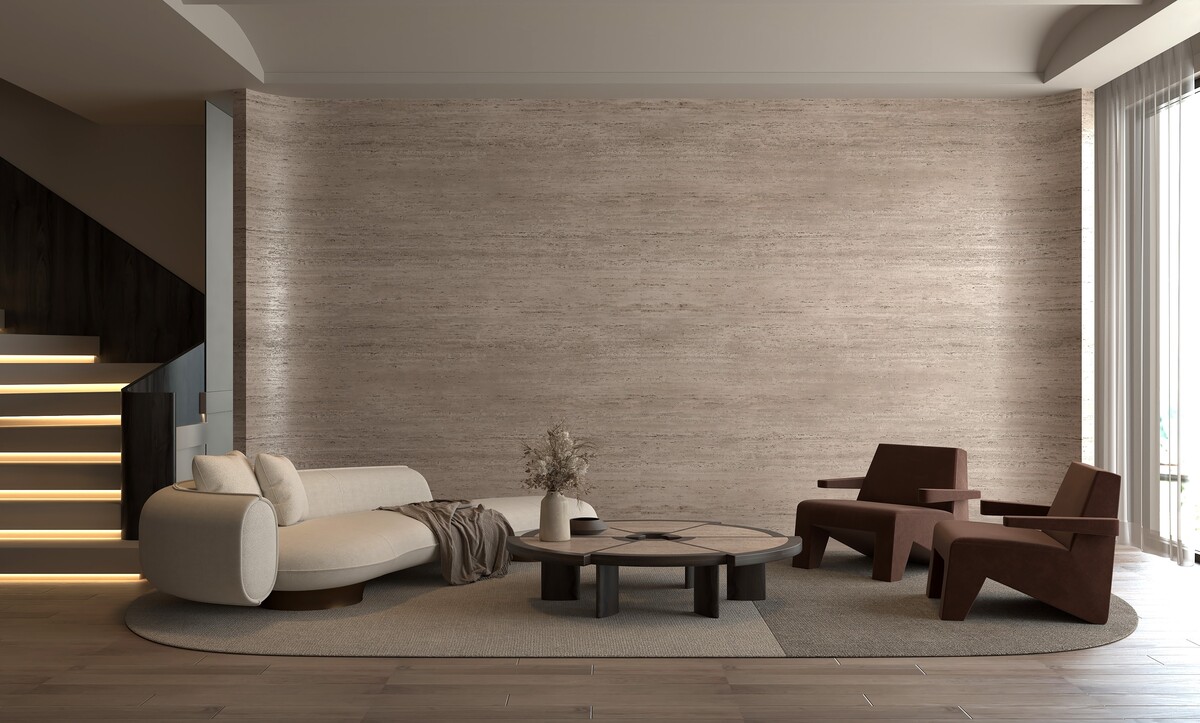
Contemporary interiors translate most directly, particularly in new-build properties. The same warm-toned minimalism that works in a Dubai villa — stone floors, neutral walls, bespoke joinery in natural timbers, carefully considered lighting — works in an Istanbul apartment with comparable effect. The main adjustment is scale: Istanbul's older properties need furniture and fittings with more vertical presence than their Dubai equivalents.
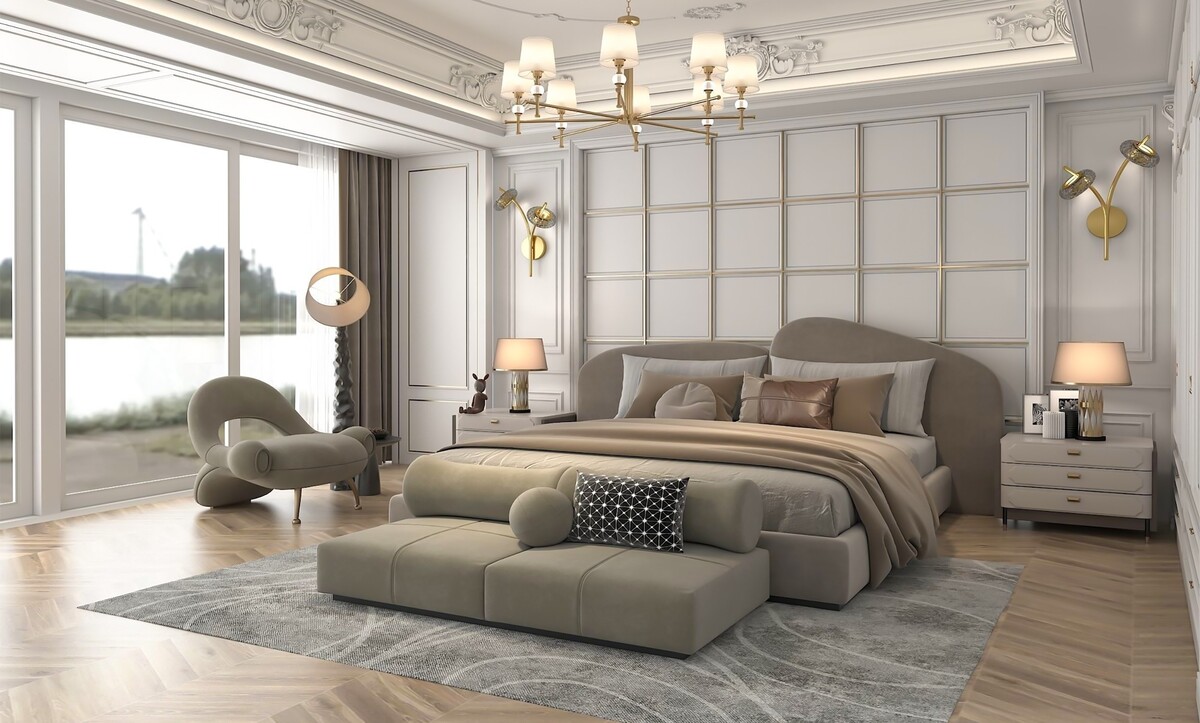
Neoclassical interiors find particularly strong support in Istanbul's production environment. Turkish craftsmen have real depth in ornate plasterwork — cornice profiles, ceiling medallions, decorative moulding — at a quality and cost that in the UAE comes almost entirely through European imports. Custom marble column work, inlaid floor patterns, and formal architectural joinery are all producible in Istanbul at prices that make this register accessible to a broader budget range than in Dubai. For UAE clients whose home in Dubai is classically registered, recreating that aesthetic in Istanbul is straightforwardly achievable, often at lower cost.
Arabic-register interiors, with geometric tile work, mashrabiya screens, and ornamental detailing in metal and carved timber, sit naturally in Istanbul for reasons rooted in shared Ottoman heritage. The craft traditions for this kind of work are genuinely present in Turkish workshops in a way they are not in the UAE, where equivalent production is mostly imported. A majlis designed in Istanbul, using Turkish geometric carving and locally produced stone, can carry the same register as its Gulf counterpart while being more deeply rooted in the materials and craft of the region.
5. Costs: What to Budget and Where the Differences Lie
Interior design costs in Istanbul vary by studio tier, project type, and neighbourhood in ways that are worth understanding before entering the market. At the top of the Istanbul residential market — Bosphorus villas, large Beşiktaş apartments, penthouse projects in Nişantaşı — full fit-out costs including design fees, bespoke joinery, stone, furniture, and installation run between $3,000 and $6,000 per square metre for high-specification work. Below that level, mid-range projects with quality materials and professional design run from $1,200 to $2,500 per square metre. A detailed breakdown of villa interior design costs in Turkey covers each cost category — structural modifications, flooring, joinery, MEP, furniture, and soft furnishings — with realistic figures in both TL and dollar terms.
Compared to Dubai, these figures represent a material saving for equivalent finish quality. The saving is largest in the categories where Turkish production is strongest: natural stone (domestic production versus import), custom joinery (local ateliers versus imported or free-zone-produced), and textiles (origin pricing versus European retail). Imported furniture brands available in Istanbul price broadly comparably to Dubai, so the saving on that line is smaller. The overall difference for a high-specification fit-out — assuming similar material and finish quality — sits in the range of 30 to 50 percent lower than an equivalent Dubai scope.
Currency exposure is a practical consideration that affects budget planning. Istanbul studios typically quote in Turkish lira for local labour and production, and in euros or dollars for imported goods and design fees at the upper end of the market. For UAE clients whose budget is in dirhams, the current lira rate creates favourable conditions for the production-heavy elements of a project. The cost of stone, joinery, and bespoke furniture — all priced in lira — sits at historically accessible levels in dirham or dollar terms.
6. Managing the Project When You Are Based in the UAE
Managing an interior design project remotely is a different discipline from overseeing one where you can visit the site weekly. The UAE-to-Istanbul distance is roughly three hours by air, and most clients working with Istanbul studios from the UAE visit two to four times over the course of a full project — at concept sign-off, material selection, mid-point review, and handover. Between visits, the project runs on structured remote communication: video calls, digital sharing of drawings and visualisations, physical material samples sent to the UAE for approval.
The single most important decision a remote client makes is choosing a studio that handles both design and execution under one contract. When a designer and a contractor are separate parties on an Istanbul project managed remotely, the coordination gap between them grows in proportion to the client's absence. Version conflicts between design drawings and contractor interpretation, specification changes that do not get communicated, and site decisions made without design input are all more likely when there is no unified point of accountability on the ground. A studio that carries full responsibility from concept to handover removes this risk structure entirely.
Three-dimensional visualisation matters more for remote clients than for those who can visit the site regularly. Before any fabrication begins, a full 3D render of each principal space — with the actual specified materials, the correct furniture scale, and accurate lighting — gives the remote client a decision-making tool that a flat plan cannot provide. Changes to the design direction at this stage cost time; changes after joinery production has begun cost money. The investment in thorough visualisation at the beginning of execution is the most reliable way to reduce late-stage change orders on a remotely managed project. For a sense of how these decisions play out across a full Istanbul villa scope, Algedra's residential interior design service page covers the full process from briefing through to installation.
Material approval is the other stage that requires particular attention from a remote client. Physical samples of stone, timber, fabric, and paint sent to the client's UAE address — rather than approved from a photograph on a screen — is the standard that avoids the most common source of client dissatisfaction on delivered projects. Colours shift between screen and reality. Stone has variation between slabs. Fabric textures read differently in hand than in image. Approving materials physically before they are ordered is the basic quality control that makes the finished result match what was agreed.
Why Choose Algedra for Your Istanbul Project
Algedra operates in both Istanbul and Dubai — Algedra Turkey in Istanbul, and Algedra in Dubai. This dual-market presence means UAE clients working on an Istanbul project bring their expectations to a studio that has already worked to those standards in their home city. There is no gap between what you expect from interior design in UAE and what Algedra delivers in Istanbul, because the same design leadership and quality benchmarks run across both offices.
Algedra handles design and execution under one contract — concept, technical drawings, material procurement, contractor coordination, and site supervision through to handover. Remote clients in Dubai and Abu Dhabi have a single point of accountability for the full project duration. The Istanbul team communicates in Arabic and English, sends physical material samples to UAE addresses for approval, and structures the project around defined decision points that concentrate client time where it matters. Completed projects across residential, hospitality, and commercial scopes in both markets are in Algedra's fit-out portfolio for clients who want to review delivered work before briefing begins.
Ready to start your Istanbul interior design project? Contact Algedra to discuss your property, timeline, and design direction. Reach us at info@algedra.com.tr or call +90 533 701 89 71.
Frequently Asked Questions
Can I manage a full Istanbul interior design project while living in the UAE?
Yes, with the right studio structure. The key is working with a studio that handles design and execution under one contract, so there is a single point of accountability on the ground throughout execution. Remote management works well when the project is structured around defined decision points — concept approval, material sign-off, 3D visualisation, and stage reviews — rather than requiring the client to be present for daily site decisions. Two to four visits to Istanbul across a full project is a realistic expectation for most residential scopes.
How long does a typical villa interior design project take in Istanbul?
For a full villa fit-out — from briefing to furniture installation — six to nine months is a realistic timeline for a mid-to-large scope. The longest lead-time items are bespoke joinery (four to eight weeks per production run), stone fabrication (two to four weeks from slab selection to installation), and imported furniture if specified. Renovation projects in older Istanbul properties add time for structural assessment and any required permit process. Planning the production schedule at the concept stage — before any procurement is committed — is where timeline risk is managed.
Is it possible to bring furniture from my Dubai home to Istanbul?
Yes, and this is a practical question worth addressing early in the briefing. Furniture that works in a Dubai apartment does not always scale correctly for Istanbul's typically larger rooms and higher ceilings. A designer reviewing the existing inventory against the Istanbul floor plan at the briefing stage can identify what transfers well, what needs replacing, and what can be reupholstered or adapted locally. Turkish upholstery workshops are competent at recovering Dubai pieces in new fabrics, which is often more cost-effective than buying new.
How different are Turkish design aesthetics from UAE design aesthetics?
At the level of high-end residential design, the overlap is larger than the difference. Both markets operate a contemporary-with-warm-materials direction, a neoclassical direction, and a traditional Arabic or Ottoman register that share significant heritage. The craft vocabulary available in Istanbul — plasterwork, geometric carving, handwoven textiles, domestic marble — gives certain aesthetics a more grounded material expression than is achievable in the UAE, where much of this production is imported. UAE clients who appreciate craft-led interiors generally find Istanbul's production environment more suited to their aesthetic than Dubai's.
What is the realistic total budget for a high-specification Istanbul villa interior design project?
For a new-build villa fit-out at high specification — bespoke joinery, natural stone throughout, quality lighting, custom upholstered furniture, and professional design fees — a combined budget of $3,000 to $6,000 per square metre is a realistic planning range. A 400 sqm villa therefore sits in the $1.2 to $2.4 million range at the top of the Istanbul luxury market. Renovation projects in existing properties need a structural contingency of 15 to 20 percent on top of the fit-out budget for discoveries that emerge during construction.