

Square footage often distracts from the true measure of a home, which is the quality of life it sustains. A compact footprint offers a unique opportunity to distill design down to its most potent elements. We reject the notion that you must sacrifice grandeur for efficiency. Instead, we invite you to explore a world where optical physics and bespoke joinery create volume out of thin air. This is the era of the "Jewel Box" apartment—a space defined not by its limits, but by its limitless details that instill a good atmosphere.
High-end interiors now favor "Midimalism," blending the clarity of minimal layouts with the richness of maximalist textures. This equilibrium keeps a home feeling open yet substantial. Visiting the best apartment interiors our designers love shows how material selection raises a modest area to a new level of style.
This blog provides a definitive blueprint for transforming small apartments through color psychology, biophilic integration, and kinetic furniture systems.
1- The Urban Density Paradigm
Metropolitan hubs like Dubai, Istanbul, London, and New York are densifying quickly. Luxury has changed from "space as volume" to "space as performance." Modern residents value location and high-quality finishes over total square footage.
1.1. The Shift from Expansive to Intensive Living
Modern architecture once focused on vast halls and redundant spaces. Designers today treat every cubic centimeter as a valuable asset. A wall serves as a storage vessel or an acoustic barrier. A dining table acts as a kinetic instrument that changes size to suit the social rhythm of the day. Every element must earn its place by performing multiple roles.
1.2. The Psychological Impact of Spatial Compression
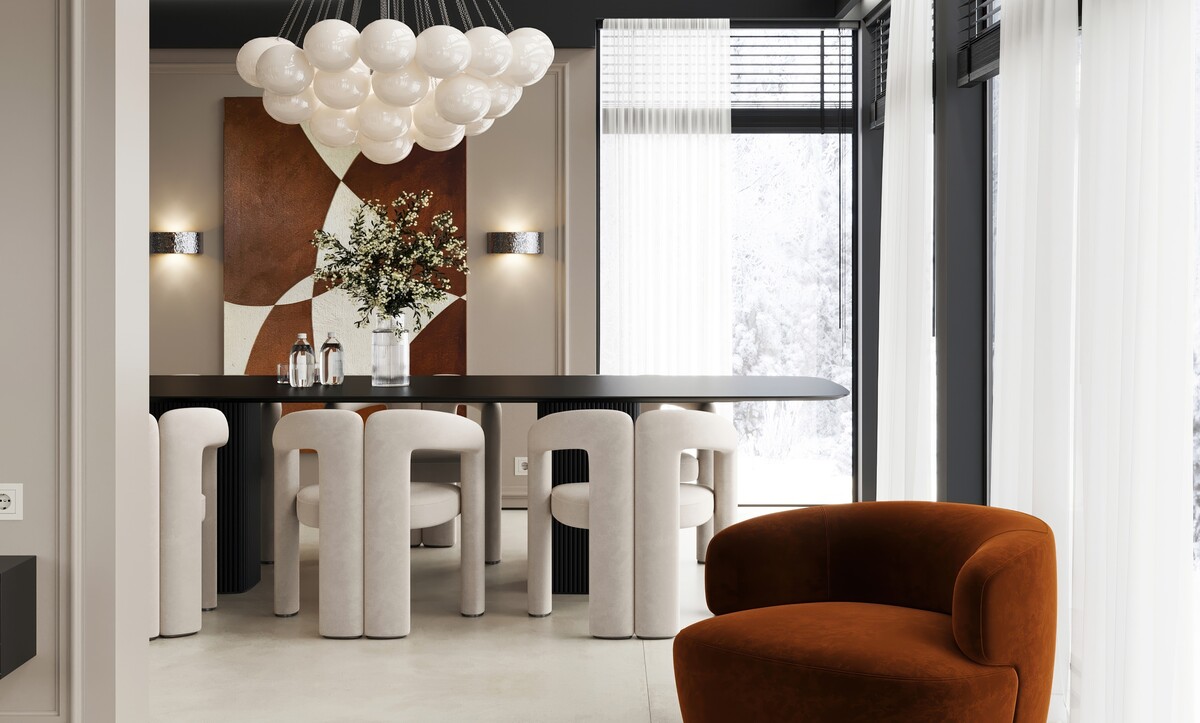
Confined quarters can cause stress or a sense of stagnation if the environment lacks precision. Reducing visual noise and navigational friction is a priority. Midimalism creates a restorative atmosphere by keeping items few but significant. This Algedra approach prioritizes emotional grounding over showroom sterility, ensuring the home feels expansive rather than crowded.
1.3. The Economic Imperative of Intelligent Design
Market demand for small space solutions is growing significantly. Residents seek guidance on how to maintain a high standard of living within urban constraints. Professional insights found in top ten ideas for a small interior design help residents solve complex spatial problems while implementing sophisticated luxury layout tips.
2- The Physics of Visual Perception
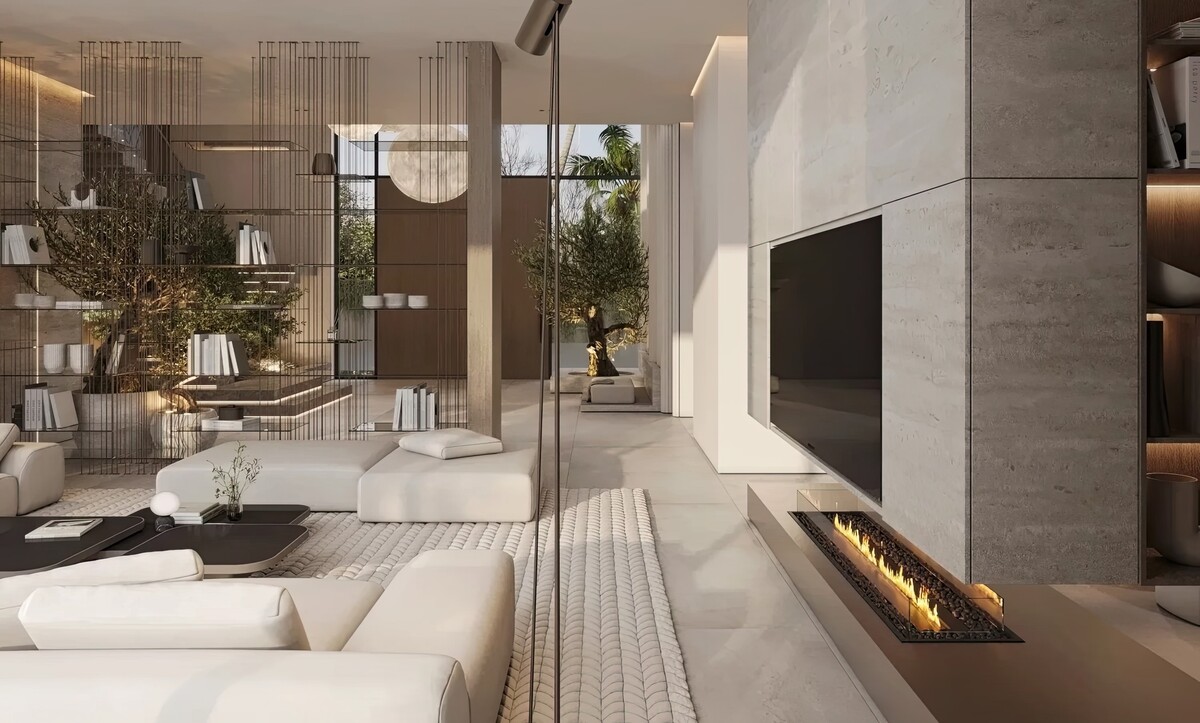
Designers use light and color frequencies to expand a room. These strategies hack the brain's spatial processing to create volume where it physically is absent. The human eye does not measure space with a tape measure; it infers volume based on the behavior of light and the continuity of lines.
2.1. Color Theory 2.0
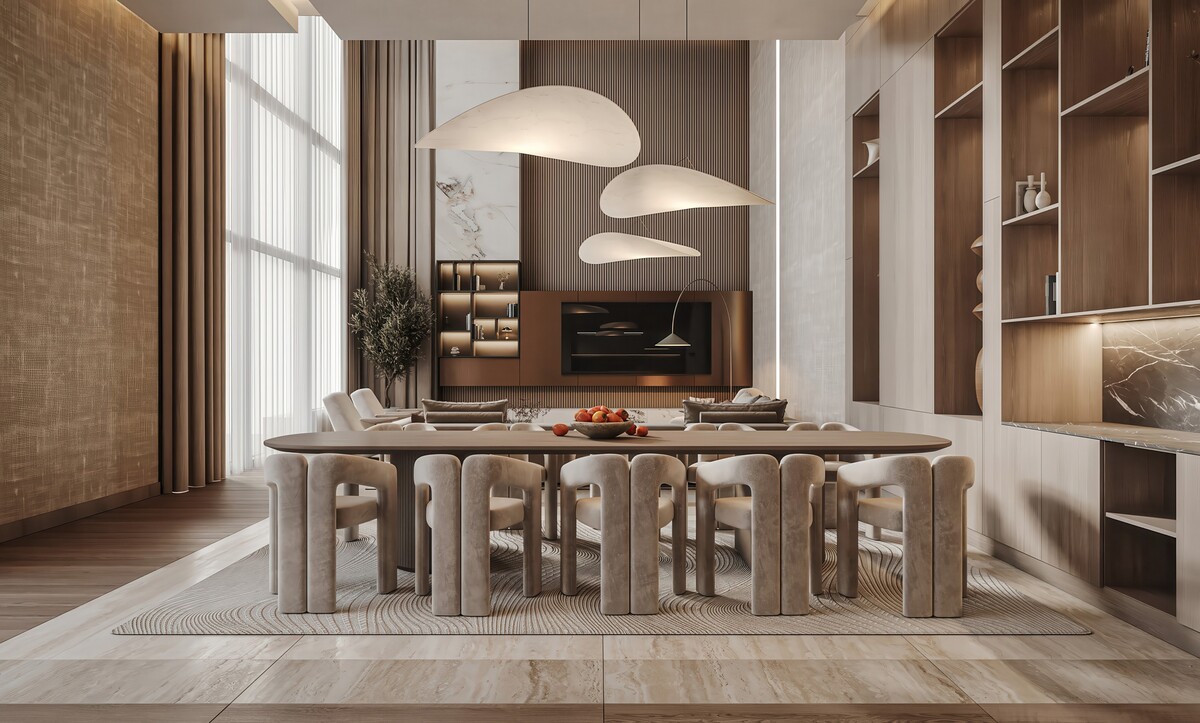
Traditional rules suggested using only stark white to maximize light reflection. Modern industry now embraces Color Drenching. This technique uses a single, cohesive hue for walls, baseboards, trim, doors, and ceilings.
- Blurring Boundaries Eliminating contrast between the wall and ceiling hides junction lines. The brain struggles to calculate exact dimensions, resulting in a perception of infinite height.
- The Coffee Drenched Palette Warm neutrals like mocha, latte, and taupe provide emotional depth. These shades reflect light softly, creating a sophisticated enclosure that flatters skin tones and materials.
- Receding Chromatics Cool tones like soft sage or slate blue have shorter wavelengths. Painting a distant wall in these colors elongates the room by making the surface appear further away.
2.2. The Strategic Physics of Reflection
Mirrors are the most potent tools in the small space arsenal when used with architectural intent. Random placement creates chaotic reflections, but strategic positioning adds luminous flux and order.
- The Phantom Window Placing mirrors directly opposite a natural light source captures incoming sunlight. This mimics the presence of a second opening, bouncing light into dark corners.
- The Infinite Floor Plane Oversized floor mirrors that lean against a wall reflect the ceiling and the floor surface. Extending the floor plane beyond the physical wall tricks the brain into perceiving a larger walkable area.
- Gloss and Sheen High-gloss lacquer cabinetry and polished marble allow light to skate across the room. These materials prevent a static feeling in low-light interiors.
2.3. Flooring Continuity and Scale
Visual fragmentation is an enemy of perceived space. Every time a flooring material changes, the eye registers a border that chops the total area into disconnected boxes.
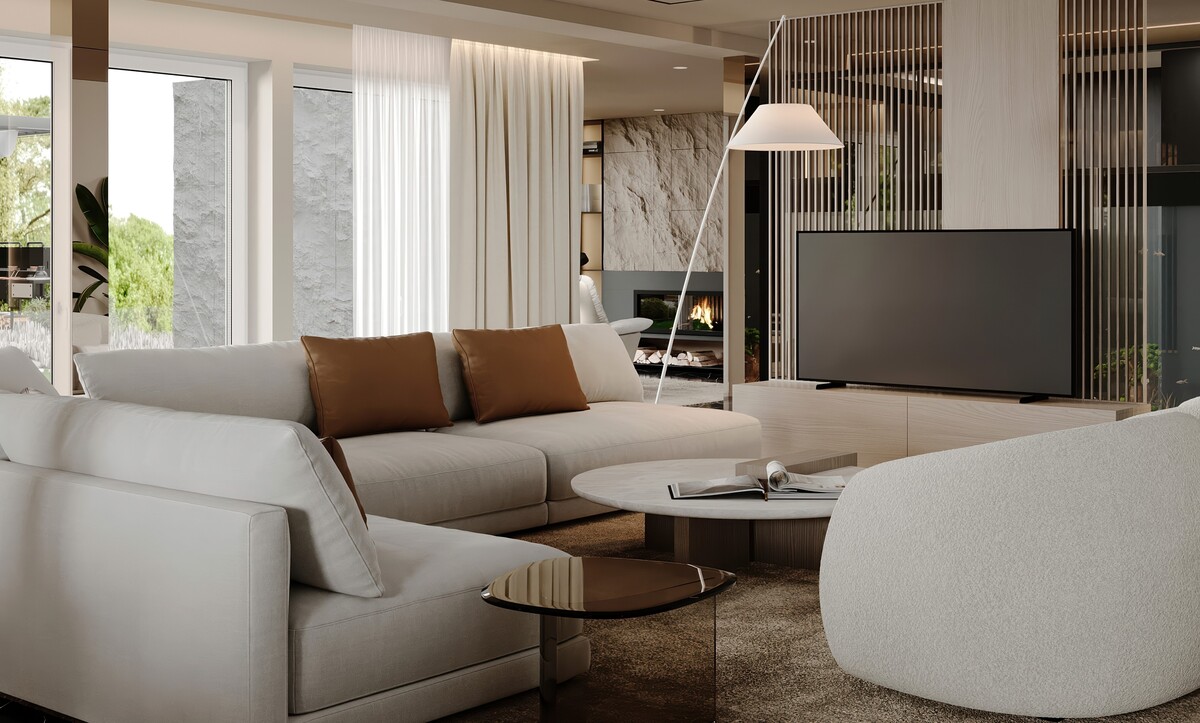
- The Unified Plane Using a single flooring material throughout the entire apartment allows the eye to sweep across the footprint smoothly.
- The Paradox of Scale Large-scale elements often work better than many small objects. A massive area rug that sits under all furniture legs unifies the zone. One large piece of art feels more expansive than a cluttered gallery wall.
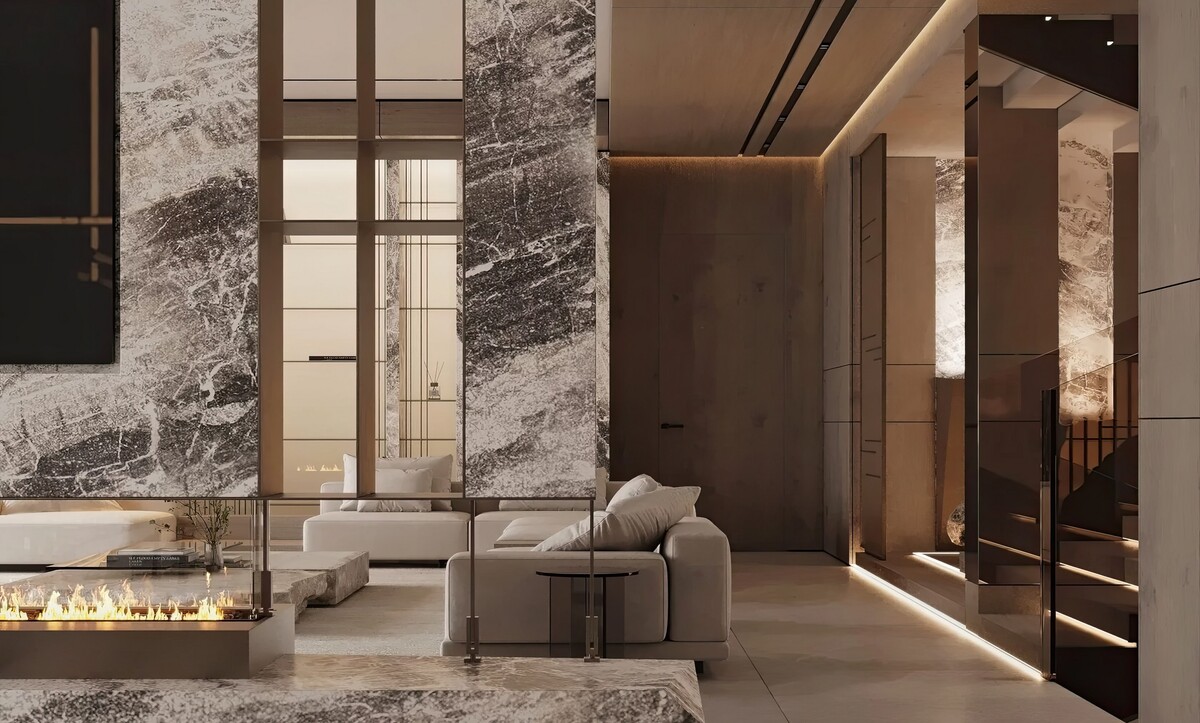
3- Architectural Interventions
Maximizing space does not always mean tearing down every wall. "Broken Plan" living preserves light while creating distinct functional zones through suggestion rather than obstruction.
3.1. The Broken Plan Concept
This layout uses partial walls and varying levels to create rooms within rooms. It is vital for remote workers needing a sense of separation between office and home within a limited footprint.
- Vertical Partitions Timber slat screens or fluted glass maintain acoustic barriers for bedrooms or studies. Vertical lines draw the eye upward to emphasize ceiling height.
- The Bookshelf Divider Open-backed bookshelves separate entryways from lounges without terminating the visual horizon. They also add storage volume in the air of the room.
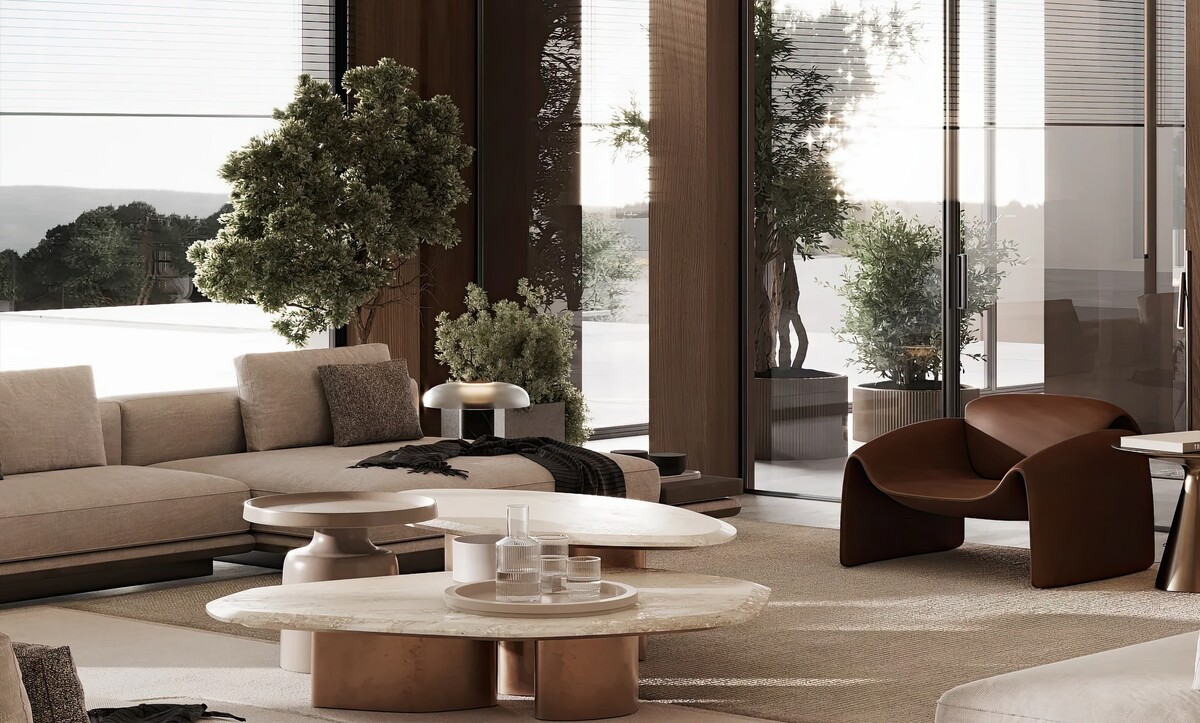
3.2. Material Transitions as Zoning Tools
Horizontal shifts can define space without using vertical barriers that block the view.
- Ceiling Topography Dropping the ceiling slightly over a kitchen creates architectural compression that feels sheltered. A recessed tray ceiling in the living room defines the lounge without a single wall.
- Floor Zoning Subtle shifts, like a transition to hexagonal marble mosaic in an open kitchen, define wet areas. Irregular edges allow materials to bleed into one another, making the transition feel fluid.
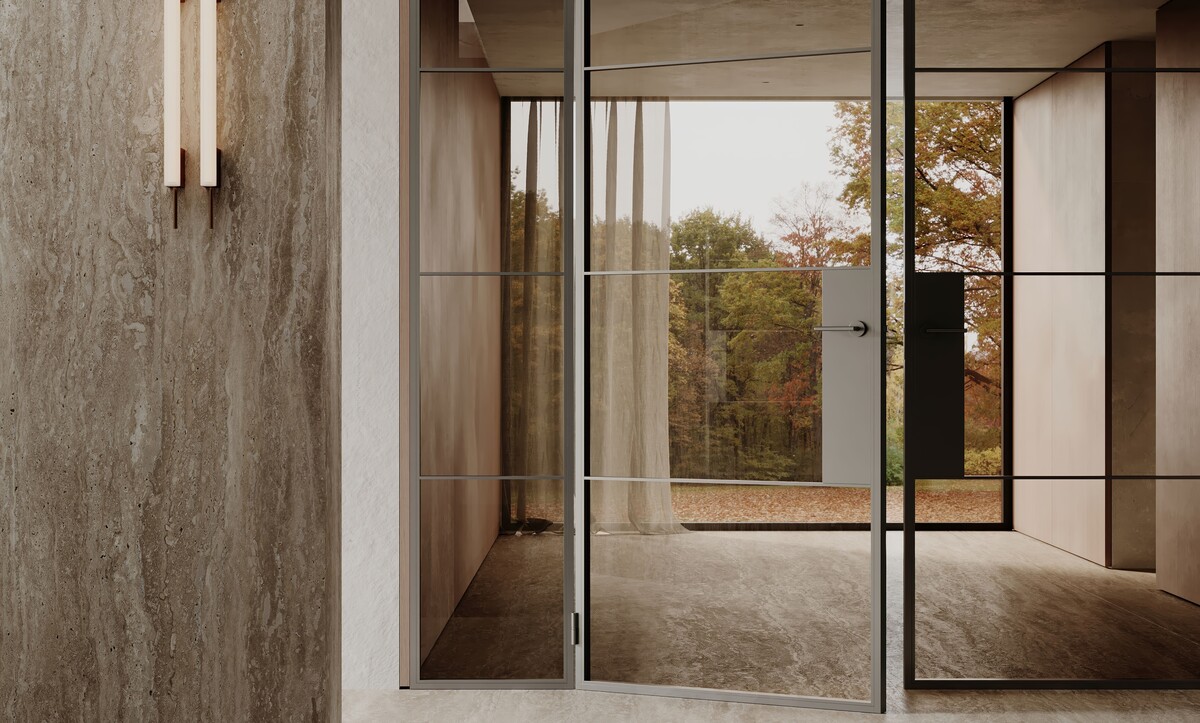
3.3. The Logic of Negative Space
Empty space is an active design element, not just the absence of furniture. It provides the breathing room that prevents claustrophobia.
- Leggy Furniture Raising sofas and armchairs on slender legs makes the floor visible underneath. Seeing the floor extend under the furniture tricks the brain into perceiving the room as larger.
- Ghost Furniture Clear acrylic or glass furniture offers full functionality while occupying almost zero visual mass. This allows light to pass through and prevents the obstruction of architectural elements.
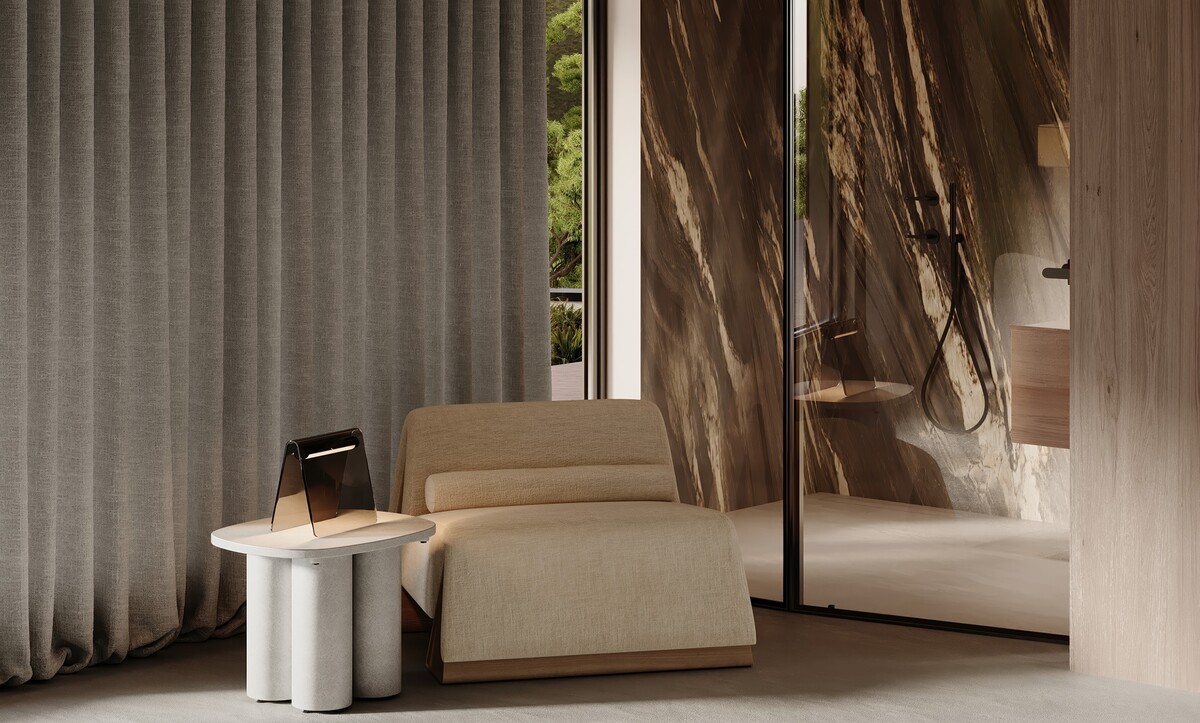
4- Kinetic Interiors
Furniture must evolve from static objects into dynamic systems as urban density increases. Kinetic furniture transforms, expands, and retracts to allow one room to do the work of three.
4.1. The Evolution of the Murphy Bed
Modern systems use precision-engineered, hydraulic-assisted modules that integrate with high-end joinery.
- Sofa Wall Bed Hybrid These units fold down over a low-profile sofa. The transition takes less than 30 seconds, creating a 24-hour room that serves as a stylish lounge by day and a master suite by night.
- The Desk Bed These features are perfect for the work-from-home era. The brilliance lies in the geometry; the desk remains level as the bed pivots down, so monitors and laptops do not need to be cleared away.
4.2. Transforming Tables and Hidden Surfaces
Dining tables are notoriously inefficient in small spaces, often sitting unused for most of the day.
- Console to Dining Slim hallway units appear as decorative consoles but feature telescopic rails. They expand to seat 10 or 12 people and then retract to reclaim floor space.
- Coffee to Dining Hydraulic lift mechanisms raise a coffee table to dining height and expand its surface area via fold-out leaves. This eliminates the need for a separate dining footprint entirely.
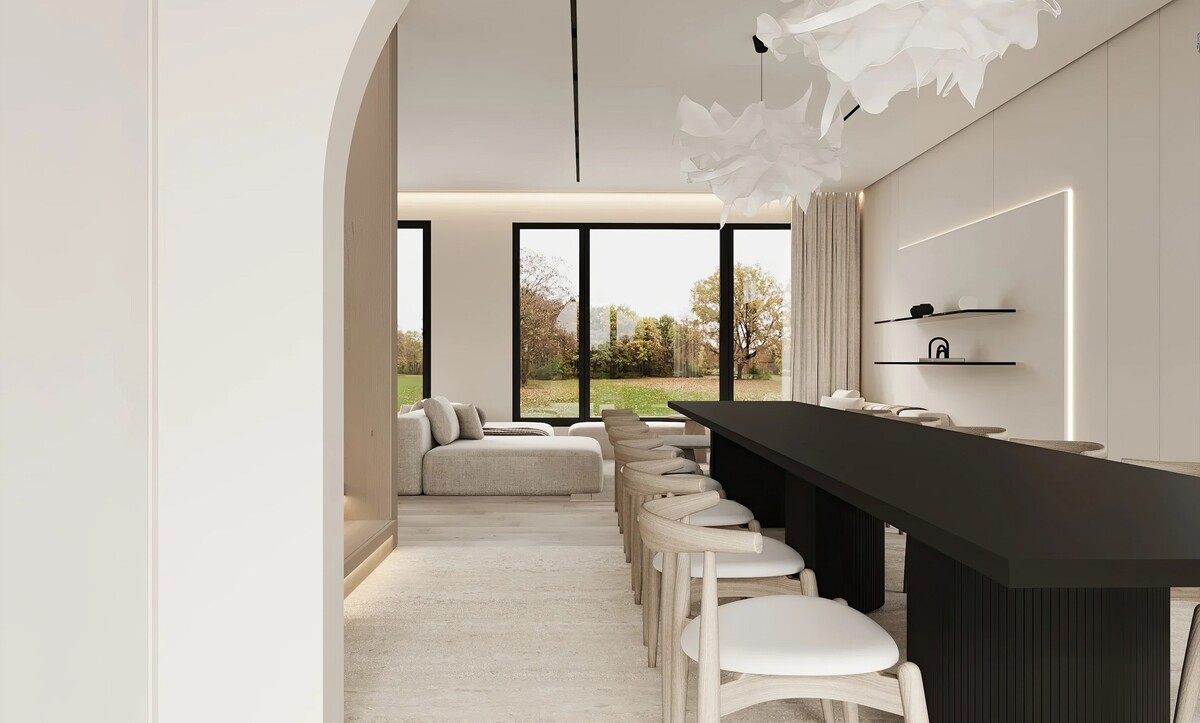
4.3. Utilizing Dead Architectural Voids
Professional designers hunt for voids—spaces that exist within standard construction but are typically sealed off.
- Toe Kick Drawers Shallow drawers installed in the 15cm plinth of a kitchen cabinet turn wasted air into utility for baking sheets or pet bowls.
- Staircase Storage Deep pull-out drawers beneath a staircase utilize the entire volume of the wedge shape. Each step can also function as a drawer, turning the circulation structure into a massive filing cabinet.
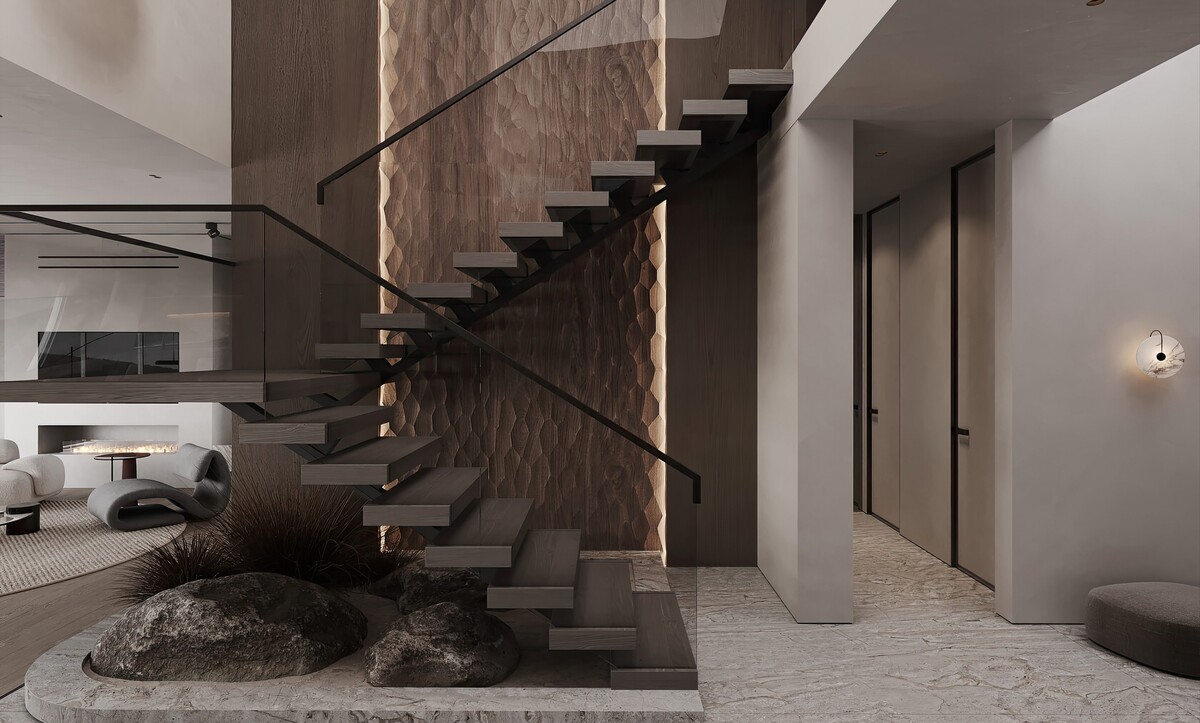
5- The Storage Imperative
Storage in a small apartment is about architectural integration, not just hiding clutter. The goal is to maximize capacity while minimizing visual intrusion.
5.1. Floor to Ceiling Joinery
Standard furniture rarely reaches the ceiling, leaving a gap that gathers dust and visually lowers the height. Custom millwork draws the eye upward to emphasize vertical volume.
- The Library Effect Full-height units provide immense storage capacity. Upper strata are ideal for deep storage like suitcases and seasonal decor, accessible via a library ladder.
- Wall of Disappearance Painting units the same color as the walls makes them read as an architectural plane. Push-to-open hardware eliminates handle clutter, ensuring a seamless look.
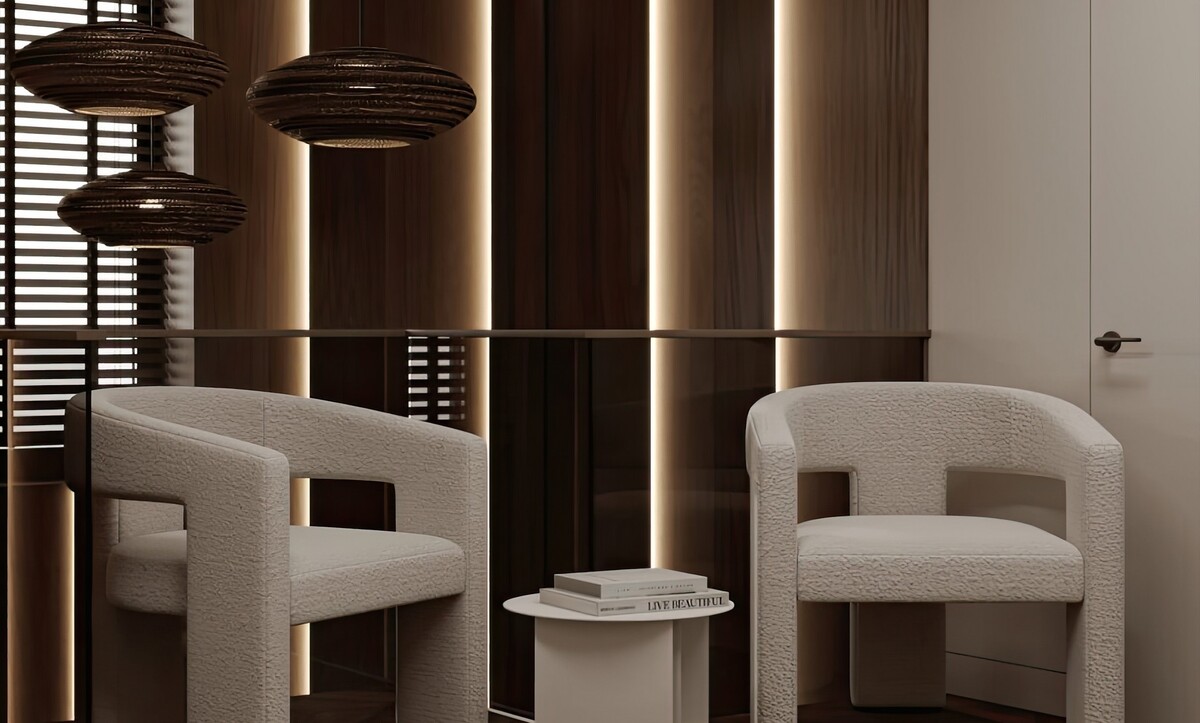
5.2. The Cloffice
Removing closet doors and installing a deep shelf creates a dedicated workspace that consumes zero floor space. Closing the doors at the end of the day provides a vital psychological separation between the office and the home.
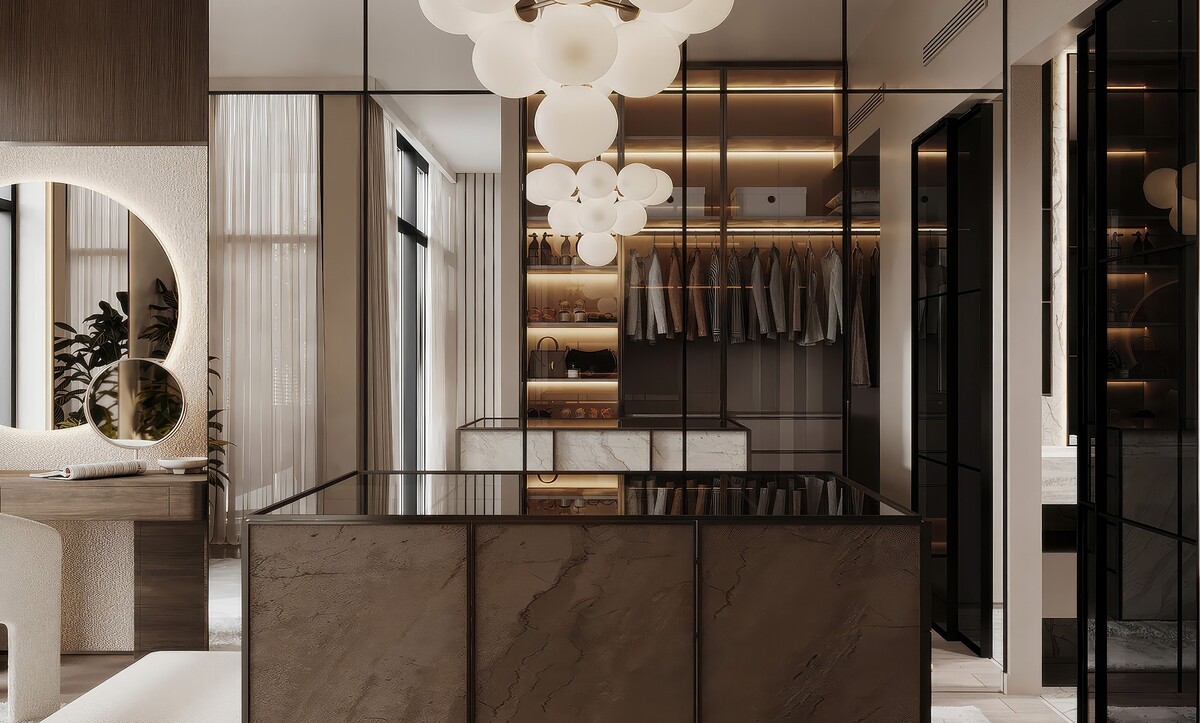
5.3. Bathroom Storage Innovation
Counter space is often non-existent in small bathrooms. Recessing mirrored cabinets into the wall cavity steals 10cm of depth from the wall itself. A hotel shelf installed above the bathroom door utilizes a space that is never looked at for voluminous towel storage.
6- The Luminous Environment
Light acts as the sculptor of volume. The absence of natural light in compact interiors creates dead zones that visually shrink the footprint. A sophisticated plan is essential to animate the space.
6.1. Three Tiered Lighting Architecture
Central fixtures often create flat, harsh light that pools in the center of the floor, leaving corners in shadow. A layered approach is much better for spatial perception.
- Ambient Light LED strips hidden in ceiling recesses lift the ceiling visually and soften shadows.
- Task Light Focused, high-intensity light under cabinets ensures utility in kitchens or at desks without over-lighting the whole room.
- Accent Light Directional beams highlight texture, art, or architectural features. Illuminating the perimeter expands the sensed boundary of the room.
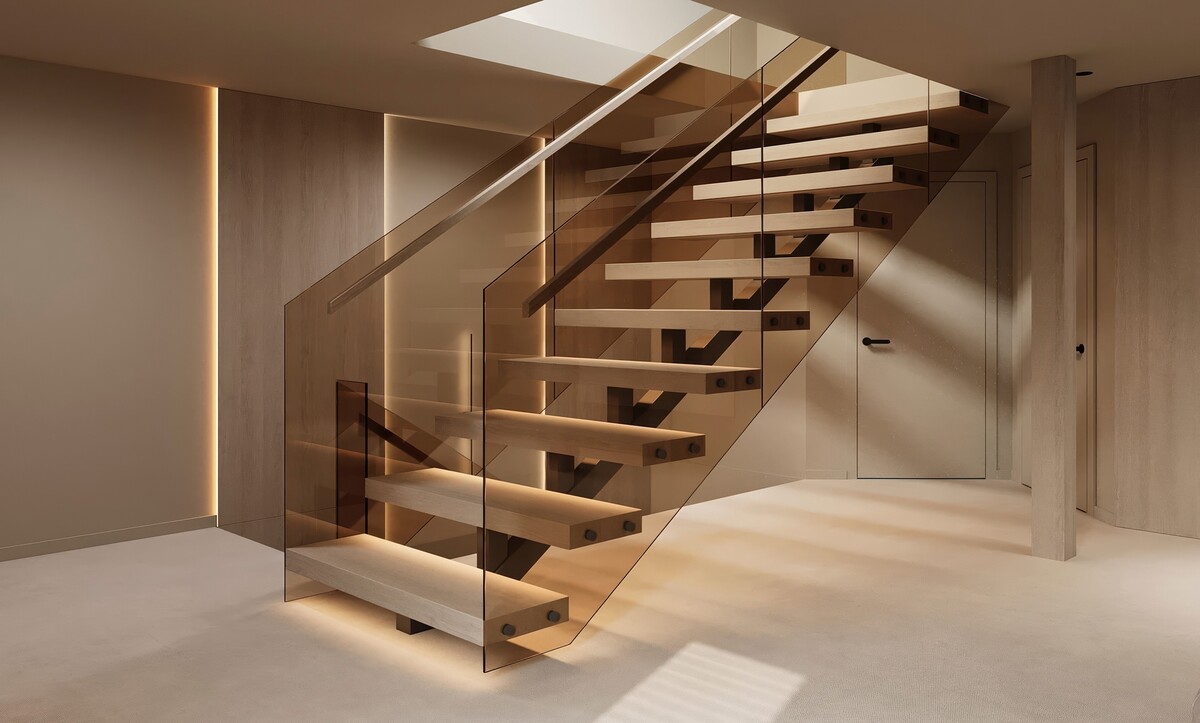
6.2. Smart Integration and Scene Control
A single room often serves as a kitchen, dining room, and office. Lighting must adapt to these shifting roles. Smart systems allow for Scene Control, where a single command changes the home from bright Work Mode to dimmed Cinema Mode. Tunable White LEDs can mimic the sun's natural progression to support circadian rhythms.
7- Materiality and Texture
Tactile quality is paramount when residents are physically closer to every surface in a small space. Materials should feel expensive and substantial even if used sparingly.
7.1. Midimalism and Tactile Layering
Varied textures, such as placing a bouclé wool cushion on a smooth leather sofa, create visual interest. This prevents a monochromatic room from feeling flat or sterile. High-end materials like exotic quartzite for a kitchen island or unlacquered brass hardware inject a sense of opulence into small footprints.
7.2. Biophilic Micro Interventions
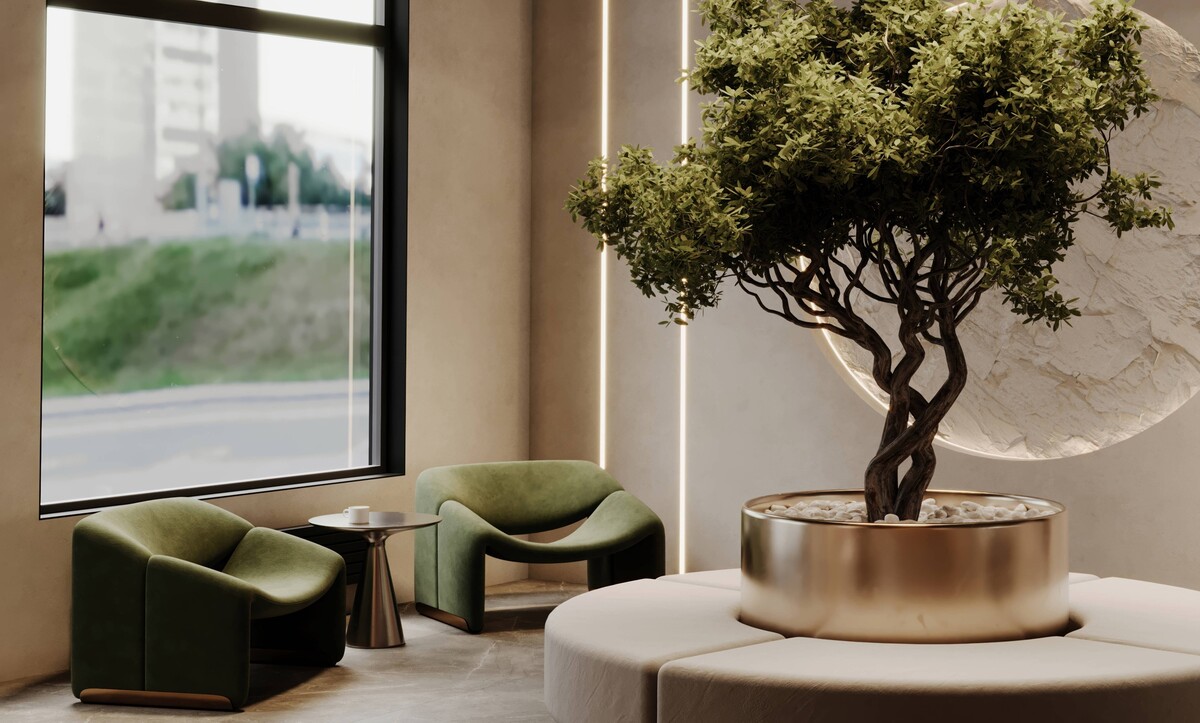
Connection to nature is crucial in dense urban environments. Vertical moss walls offer greenery and acoustic dampening without using floor space. Organic geometries, such as round dining tables and curved sofas, allow for smoother circulation paths through the apartment and visually soften the rigid rectilinearity of the architecture.
8- Functional Deep Dives
8.1. The Living Room
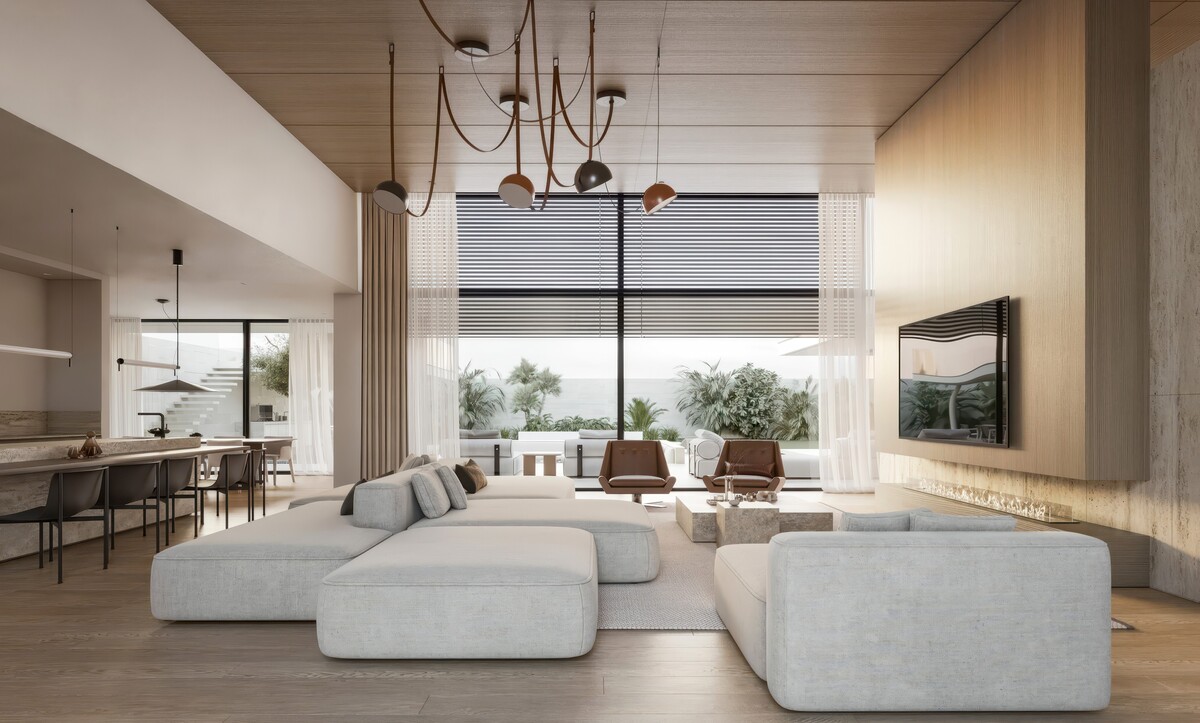
Avoid petite furniture that looks like dollhouse furniture. A standard-sized, deep-seated sofa is more comfortable and looks more luxurious. Media walls anchor the room by housing the TV and concealing cables. Ensuring the rug is large enough for the front feet of all seating to rest on it binds the furniture into a cohesive group.
8.2. The Kitchen
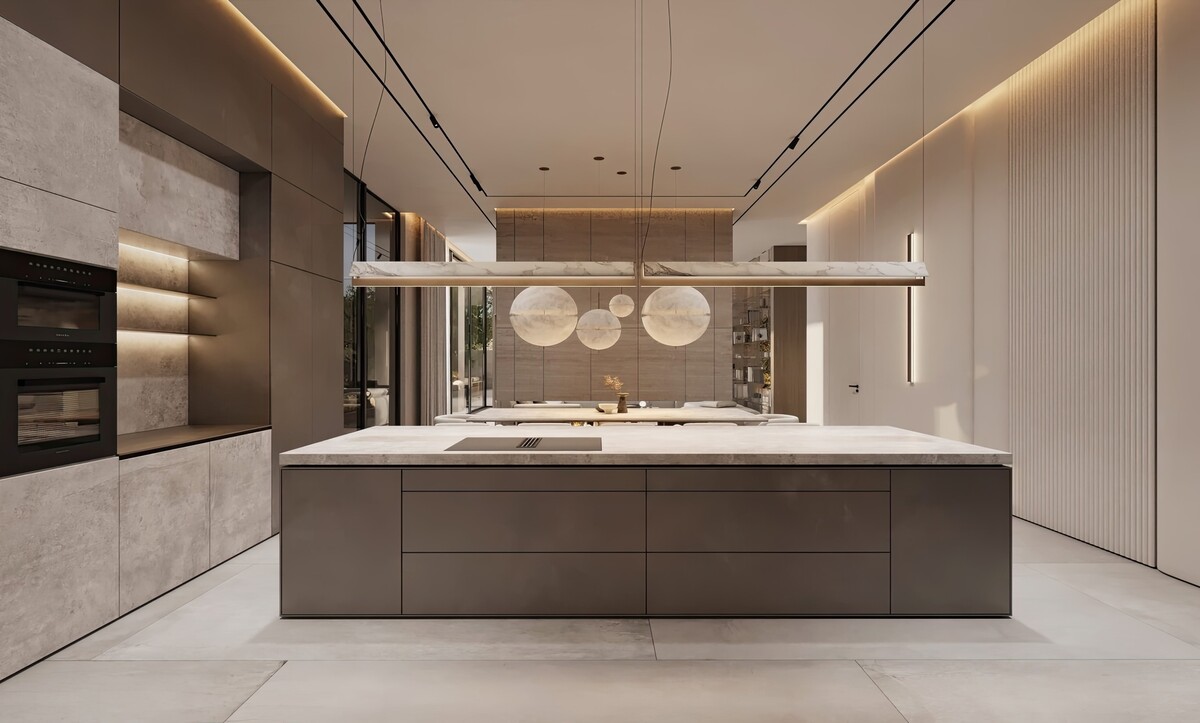
Appliance garages hide toasters and blenders to keep visual lines clean. Reflective backsplashes make the kitchen feel twice as deep and allow the cook to see the room behind them. Large single-bowl sinks are more functional than two tiny bowls for handling large pots in a compact space.
8.3. The Bedroom
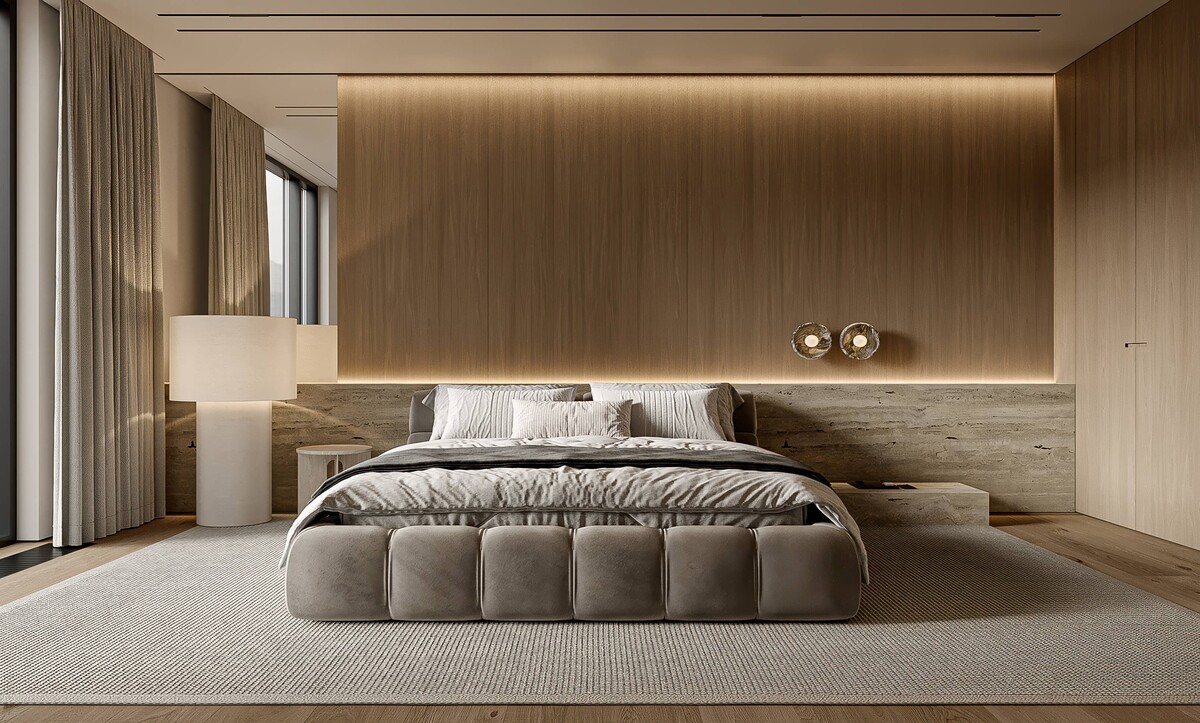
Wall-mounted sconces free up the entire nightstand surface for books and water. Hydraulic lift beds reveal the entire footprint of the mattress as storage for bulky items. Extending an upholstered headboard panel across the entire width of the wall widens the room visually and adds acoustic softness.
8.4. The Bathroom
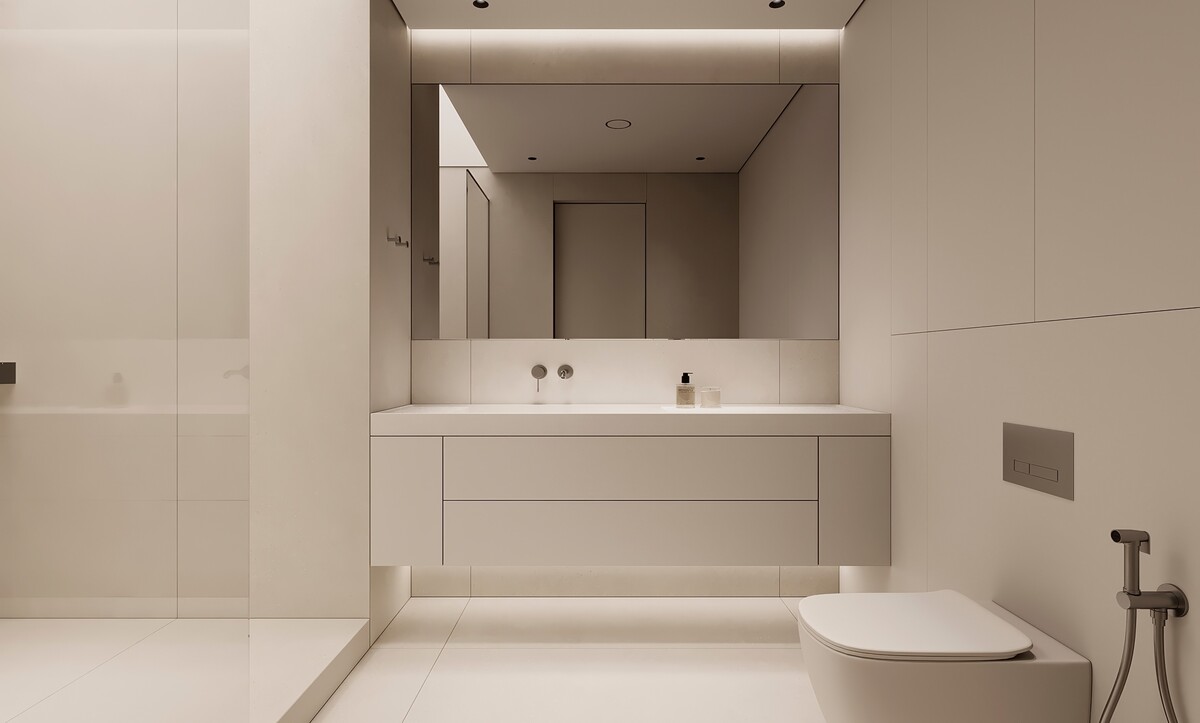
Floating vanities expose the floor tile underneath, making the room feel wider. Large format tiles reduce grout lines, which are a form of visual clutter. Running tiles vertically can exaggerate the ceiling height, while recessed shower niches eliminate the need for hanging caddies.
8.5. The Entryway and Hallways
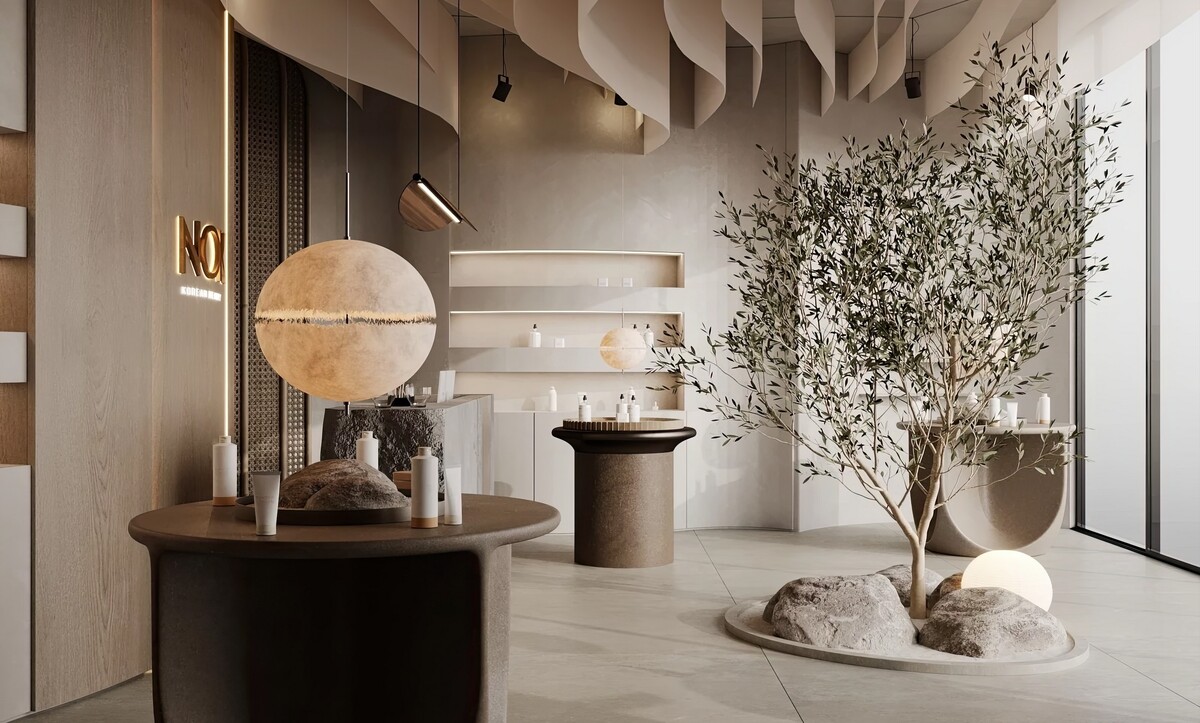
Narrow spaces benefit from wall-mounted consoles and high-placed lighting. Mirrors at the end of a hallway can visually double its length. Vertical shoe storage keeps the circulation path clear while providing essential organization.
9- Strategic Implementation for Design Excellence
Expert design relies on a multidisciplinary approach. It requires the architectural efficiency of a naval engineer and the visual psychology of an artist. Moving beyond the fear of dark colors and embracing the utility of vertical space allows even a compact home to offer a lifestyle of luxury. Small apartments are no longer a compromise; they are a distilled concentration of the best elements of living. Algedra presents these solutions as upsizing the quality of life through intelligent, bespoke design. The future of luxury is smart, curated, and deeply personal.
Conclusion
Design excellence transforms limited footprints into grand experiences. We apply optical precision and smart layouts to create sanctuaries. Your home deserves the touch of Algedra experts who understand the nuances of intensive living. Small apartments offer a unique opportunity to curate perfection through Midimalist aesthetics.
Book Your Exclusive Design Consultation
Ready to elevate your living experience? Schedule a meeting with our lead interior designers and architects today.
Frequently Asked Questions
1- How do I make my small apartment look larger?
Use color drenching to blur boundaries. Mirrors placed opposite windows also double the light.
2- What is the best furniture for studio apartments?
Kinetic furniture works best. Choose Murphy beds with sofas or expanding console tables.
3- Can I use dark colors in a small room?
Dark hues create depth and intimacy. They blur corners, making the room feel infinite rather than small.
4- How can I add storage without clutter?
Utilize floor-to-ceiling joinery. Hidden drawers in toe kicks and staircases also maximize utility.
5- What is Midimalism?
Midimalism blends minimalism with texture. It keeps lines clean while adding warmth through materials.